
Canned Tuna Avocado Salsa with Lime
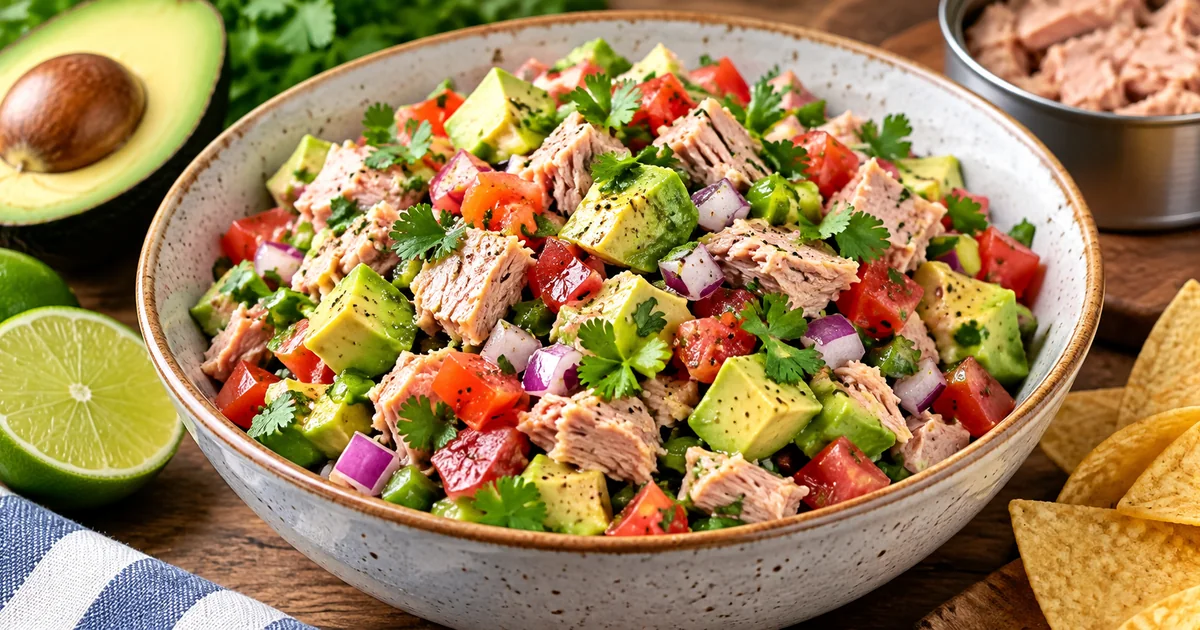
Tuna avocado salsa is a chilled, spoonable seafood appetizer built around a clear choice: fully cooked, shelf-stable canned light tuna rather than raw tuna steaks or a vaguely defined mix of canned and seared fish. This measured version combines well-drained tuna, ripe but firm avocado, diced tomato, cucumber, red onion, cilantro, and a restrained fresh-lime dressing. It is intended as four appetizer portions and takes about 15 minutes to assemble once all ingredients are available and the vegetables have been washed. There is no cooking stage.
Unlike a creamy tuna sandwich filling, this salsa keeps the fish in small, recognizable flakes and uses citrus and olive oil rather than mayonnaise. The avocado is added at the end, so it contributes soft pieces instead of turning the mixture into a thick dressing. It can be spooned into small bowls or served with plain corn tortilla chips. The quantities below are an editorial recipe formulation, not a claim of personal kitchen testing or a guarantee that every can of tuna will drain to the same weight.
Choosing canned light tuna makes the preparation consistent: the recipe begins with a ready-to-eat product and does not ask readers to decide whether briefly seared or citrus-soaked raw tuna is safe. The tuna is still perishable after opening, so the vegetables and fish should be assembled with clean utensils and kept chilled until serving. If you need a different canned-tuna meal, SABSEA’s tuna lettuce wraps use a thicker filling and crisp leaves; this article focuses on a loose, fresh salsa with avocado and lime.
Table of Contents
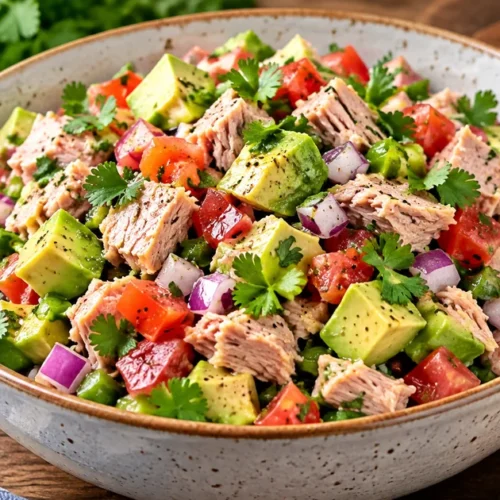
Canned Tuna Avocado Salsa with Lime
Ingredients
- 2 5-oz cans canned light tuna packed in water about 142 g per unopened can; drain thoroughly; total drained yield varies by brand
- 1 medium ripe but firm avocado dice just before serving
- 1 cup diced Roma tomatoes about 2 medium; remove especially wet seeds before measuring
- 1/2 cup diced cucumber about half a small cucumber, depending on size
- 1/4 cup finely diced red onion measure after chopping
- 2 tbsp chopped fresh cilantro washed and dried
- 2 tbsp freshly squeezed lime juice measure; extra wedges for serving are optional
- 2 tsp extra-virgin olive oil
- 1/4 tsp kosher salt adjust after tasting; packaged tuna salt levels vary
- 1/8 tsp freshly ground black pepper optional
- 1 small jalapeño optional; remove seeds and finely dice
Instructions
- Open the two cans of fully cooked ready-to-eat light tuna, drain thoroughly and separate gently into small flakes. Wash and dry the produce using clean equipment.
- Dice enough seeded Roma tomato to measure 1 cup, cucumber to measure 1/2 cup and red onion to measure 1/4 cup. Chop 2 tablespoons of cilantro and, if using, finely dice the seeded jalapeño. Leave the avocado whole until the final step.
- Whisk 2 tablespoons lime juice, 2 teaspoons olive oil, 1/4 teaspoon kosher salt and optional 1/8 teaspoon black pepper in a clean bowl. Toss with the measured tomato, cucumber, red onion, cilantro and optional jalapeño.
- Gently fold the well-drained tuna into the dressed vegetables. Taste and adjust salt or lime only if necessary. Cut and dice the medium avocado immediately before serving, then gently fold it in once or twice.
- Divide into 4 appetizer servings. Serve promptly with optional plain corn tortilla chips, cucumber slices, lettuce leaves or lime wedges. Refrigerate if service is delayed; do not leave unrefrigerated beyond safe holding limits.
Notes
What makes this a salsa rather than a tuna salad
The defining choice is the cut of the vegetables and the way the ingredients are mixed. Roma tomato and cucumber are diced small enough to pick up with tuna on a chip, while a measured amount of finely chopped red onion adds a sharper note without dominating the bowl. Cilantro and fresh lime juice provide the aromatic and acidic portion. Olive oil is measured rather than poured freely, because excess liquid makes it difficult to serve the salsa neatly.
The tuna should be flaked gently. Pressing it into a paste would make the result closer to a sandwich spread, while leaving it in very large pieces would make each spoonful uneven. The avocado is folded in only once, just before serving; overmixing it can cloud the lime dressing and hide the separate colors of the tomato and cucumber. These are practical assembly choices, not a claim that one version is universally the best or that the pictured result has been tested against other recipes.
This is also different from tuna poke. Poke normally involves a separate rice-bowl format and may call for raw fish; this recipe does neither. It is deliberately limited to commercially canned ready-to-eat tuna, making the ingredient state easy for readers to verify from the package label. No vinegar, wine, cooking liquor, or alcohol-based sauce is required. If serving with purchased chips or condiments, read their labels for ingredients relevant to your household.
Choosing the tuna and preparing the vegetables
Buy two standard 5-ounce (142 g) cans of light tuna packed in water and drain them thoroughly. The amount of fish left after draining depends on the brand, so the recipe specifies unopened can size rather than pretending that every product has the same drained weight. A fork is sufficient to lift the tuna out in small flakes. Do not use raw tuna or substitute a pouch that requires cooking without changing the method and safety instructions. Oil-packed tuna would change the balance of liquid and fat, so it is a separate adjustment rather than an exact one-for-one match to this formula.
For readers who follow fish-consumption guidance, the FDA/EPA Advice about Eating Fish categorizes canned light tuna, which commonly includes skipjack, differently from albacore or bigeye tuna. The guidance is particularly relevant to people who might become pregnant, are pregnant or breastfeeding, and children. Consult the current official chart for species-specific recommendations rather than assuming all tuna products have identical mercury levels. This editorial recipe does not prescribe how often an individual should eat tuna.
Choose one medium avocado that yields neat dice but is soft enough to eat. The tomatoes should be ripe, but seed any especially wet centers before measuring one cup of chopped pieces. Dice half a small cucumber to make about half a cup; the exact fraction of a whole cucumber depends on its size. Measure a quarter cup of red onion after chopping so the amount is consistent across different onions. Wash the cilantro and vegetables, dry them, and use clean utensils. An optional small seeded jalapeño can be included for mild to moderate heat, but it is not necessary for the base flavor.
The measured lime and olive-oil dressing
The dressing is deliberately simple: two tablespoons of freshly squeezed lime juice, two teaspoons of extra-virgin olive oil, a quarter teaspoon of kosher salt, and an optional eighth teaspoon of black pepper. These amounts are a starting formulation for two cans of tuna and the stated volume of vegetables. Fresh limes vary in juice yield, so measure the liquid rather than requiring an exact number of fruit. You can bring a lime wedge to the table for individual adjustments, but that garnish is not part of the measured two-tablespoon base.
Mix the lime juice, olive oil, and seasonings in a small clean bowl before adding them to the vegetables. Distributing the dressing first makes it less likely that one part of the finished bowl will taste excessively sharp or salty. Add tuna after the chopped vegetables have been lightly coated, and keep the avocado out of the mixture until the last gentle fold. This order is easier to reproduce than pouring all the ingredients into one bowl and stirring repeatedly.
If the tomatoes are unusually juicy, remove a little of their seed liquid; do not compensate by automatically adding more tuna or oil. If a particular brand of canned tuna tastes salty, check its label and taste the mixed salsa before adding more salt. There is no soy sauce or mayonnaise in the recipe, which also keeps the citrus and avocado more visible as separate elements. The recipe makes no nutrition or sodium claim because those values vary materially with tuna brand and serving accompaniments.
Assemble the tuna avocado salsa in five steps
First, open and completely drain the two cans of ready-to-eat light tuna. Transfer the fish to a clean bowl and separate it gently into small flakes with a fork. Wash and dry the cucumber, tomatoes, cilantro, red onion, and optional jalapeño before chopping. Keep the avocado whole for now to minimize browning while the other ingredients are prepared.
Second, seed the especially wet tomato centers if necessary and measure one cup of diced tomato. Dice enough cucumber to fill half a cup, finely dice a quarter cup of red onion, and chop two tablespoons of cilantro. Finely chop the optional seeded jalapeño. Try to keep the tomato and cucumber pieces comparable in size so the salsa can be scooped rather than needing to be cut again at the table.
Third, whisk the two tablespoons of lime juice with two teaspoons of olive oil, a quarter teaspoon of kosher salt, and the optional eighth teaspoon of black pepper. Put the tomato, cucumber, onion, cilantro, and optional jalapeño into a mixing bowl, and toss with the dressing. This is the point to distribute the citrus evenly without breaking down the avocado.
Fourth, fold in the drained tuna until the vegetables and the small flakes are distributed evenly. Taste a small portion and adjust with additional salt or fresh lime only if needed. Cut and dice the avocado immediately before serving. Add it to the bowl and fold gently once or twice with a broad spoon, stopping while its pieces still have their shape.
Finally, divide into four small appetizer bowls and serve promptly with plain corn tortilla chips, cucumber slices, or lettuce leaves if desired. Optional accompaniments are not included in the ingredient or yield calculation. Place the bowl back in the refrigerator if serving will be delayed. This dish is designed as a fresh assembled salsa, not a cooked tuna meal or a product with a validated room-temperature holding life.
Serving choices and what this dish does not replace
The salsa is easiest to eat from small bowls, where its loose dressing can collect without soaking a sandwich or wrap. Plain corn tortilla chips make a convenient scoop, while small lettuce leaves provide another serving surface. If offering both, keep chips in a separate container to preserve their texture. Serving with rice is possible, but that creates a separate rice-bowl dish with its own ingredient amounts and handling needs; the published tuna lettuce wraps already cover another distinct canned-tuna format.
For a shared appetizer, make the vegetable-and-dressing mixture first and add tuna and avocado just before it is needed. The tomato and cucumber will continue to release moisture after mixing, so it is better to drain or lightly spoon the salsa than to promise that it stays dry for hours. A shallow chilled serving bowl helps with portioning, and extra lime wedges can be placed separately for anyone who prefers a sharper finish. None of these optional presentations changes the measured base recipe.
When buying tortilla chips, choose a product suited to the household’s ingredient requirements. This particular tuna avocado salsa contains no added alcohol or pork ingredients; however, purchased canned tuna, seasonings, and serving products have separate ingredient labels and possible allergen or cross-contact statements. Tuna is fish, an allergen that should be identified when serving guests. If a recipe needs a verified dietary certification, that must come from the actual packaged products, not a generic article claim.
Food safety, storage, and tuna choices
Commercially canned tuna is ready to eat as sold, but it needs refrigerator handling once opened and mixed with fresh vegetables. Use clean bowls, a clean cutting surface, and utensils that have not contacted raw seafood. Keep the finished salsa at 40°F (4°C) or below until it is served. The FDA’s seafood-handling guidance says seafood and other perishable foods should not be left unrefrigerated for more than two hours, or more than one hour if the temperature is above 90°F (32°C). Set a shorter limit if an ingredient label requires one.
FoodSafety.gov’s cold-storage chart lists three to four days for refrigerated tuna salads at or below 40°F (4°C). That is a broad safety-storage reference, not a guarantee of appealing texture for an avocado salsa. For this particular combination, assemble near serving time and preferably enjoy it the same day for color and texture. Promptly refrigerate any remaining portion in a covered container, follow shorter package instructions, and discard food that has exceeded safe holding conditions. Do not rely on a smell test to restore food that was improperly stored.
Different tuna species have different mercury profiles. For this formulation, choose labeled canned light tuna rather than silently substituting albacore or other species, especially if serving people who need to follow fish-consumption guidance. Do not call the recipe mercury-free or imply that a single tuna meal is appropriate for every person. Readers needing individualized dietary guidance should use official species and serving advice and their own clinical guidance where applicable.
Make-ahead adjustments without losing the texture
The most useful preparation that can be done ahead is washing, drying, and chopping the firmer vegetables. Keep the tomato, cucumber, onion, and cilantro in separately covered containers in the refrigerator if preparing before a gathering. Measure the lime juice and olive oil into separate covered containers rather than soaking all of the vegetables hours early. Open the cans of tuna only when you are ready to make the salsa or immediately refrigerate any opened tuna as directed on the package.
Do not dice the avocado far ahead and expect the lime juice to preserve its color indefinitely. Cut it last and fold it in gently. The cucumber and tomato will also release liquid with time; even a safely chilled batch can lose its neat scoopable texture. If the main purpose is several days of packed lunches, keep ingredients separate and assemble one portion at a time instead of presenting a finished four-serving bowl as a meal-prep product guaranteed to hold for days.
If you want more heat, the optional jalapeño can be finely chopped and offered on the side. If guests prefer no heat, leave it out rather than replacing it with an unspecified spicy sauce. Additional sauces can contain ingredients or salt levels not reflected in the recipe, so do not fold them into the standard WPRM directions. These choices preserve one repeatable base formulation and keep recipe-card measurements aligned with the article.
Frequently asked questions
Can I use raw or briefly seared tuna instead of canned tuna?
Not with this recipe’s no-cook instructions. The formula specifically calls for fully cooked, commercially canned ready-to-eat light tuna. Raw or briefly seared fish involves different sourcing and preparation risks, and adding lime juice does not make raw seafood equivalent to a cooked product. Follow appropriate guidance for any separate raw-fish preparation; do not treat this recipe as that guidance.
Should I use tuna in water or tuna in olive oil?
Use two 5-ounce cans of light tuna packed in water and drain them thoroughly. The recipe already includes two measured teaspoons of olive oil, so oil-packed tuna would change its liquid and richness. If choosing an oil-packed product, treat it as a separate variation rather than assuming the original quantities still apply exactly.
How do I keep the avocado from becoming mushy?
Choose ripe but reasonably firm avocado and dice it immediately before serving. Mix the lime dressing and vegetables first, fold in the drained tuna, then gently add the avocado at the end. Stop folding when its individual pieces are still recognizable. Cutting it well ahead or repeatedly mixing the finished bowl makes the texture harder to control.
Can I make tuna avocado salsa the day before?
Prepare and refrigerate washed, chopped firmer vegetables in separate covered containers, then open and drain the tuna and dice the avocado when ready to assemble. Refrigerate a finished salsa promptly, but expect its avocado color and vegetable texture to change as it sits. Follow package instructions and the official cold-storage and room-temperature holding limits rather than relying on appearance alone.
Is canned light tuna the same as albacore tuna?
No. Canned light tuna commonly includes skipjack, while canned white tuna is usually albacore. The FDA/EPA fish-consumption chart places these products in different categories based on mercury content for pregnant or breastfeeding people and children. Check the official advice and the actual product label; this recipe intentionally specifies canned light tuna.
A clear, repeatable seafood appetizer
The practical advantage of this tuna avocado salsa is that the method commits to a single ready-to-eat fish product, measured citrus, and a consistent mixing order. It offers a different serving experience from a tuna lettuce wrap or a rice-based poke bowl without claiming a nutritional effect, cultural authenticity, or kitchen testing that has not occurred. Check product labels, keep the bowl chilled, and add the avocado at the end for a fresh, loose appetizer that can be served immediately.