
How to Thaw Frozen Shrimp Safely Without Losing Texture
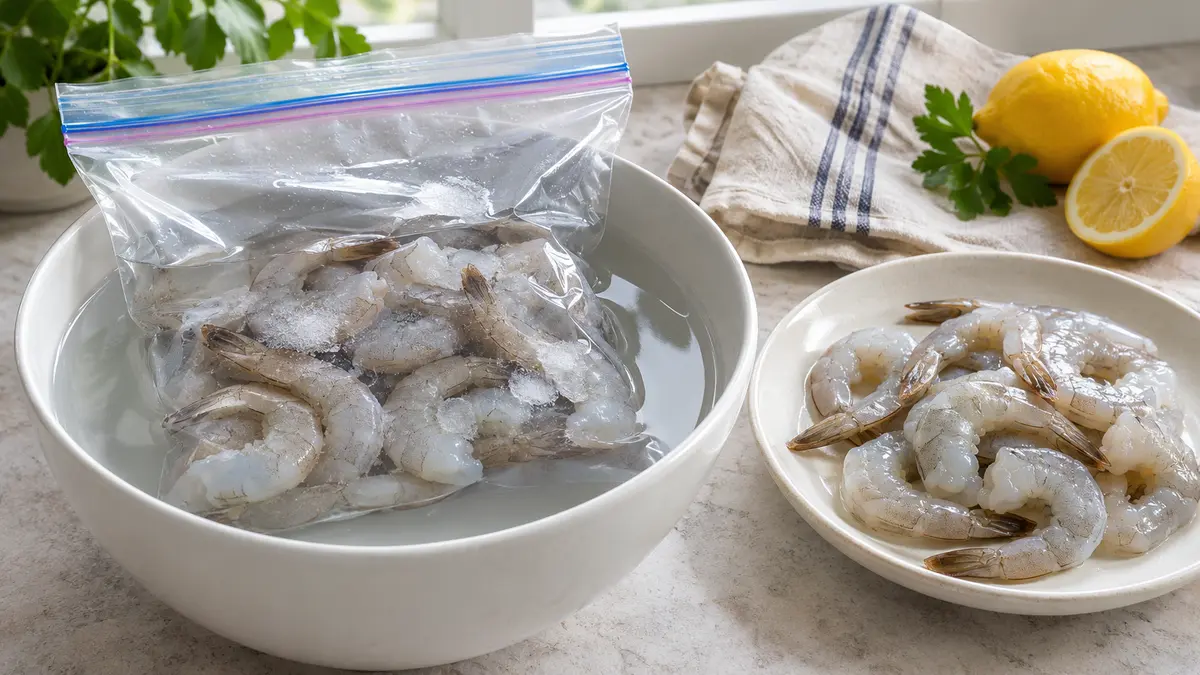
Frozen shrimp are a useful shortcut, but a poor thaw can leave them watery, unevenly cooked, or unpleasantly soft. The best method depends on how soon you plan to cook: an overnight refrigerator thaw gives you the most control, while a sealed bag in cold water helps when dinner is close. Microwave defrosting is a last-minute option only when the shrimp will go straight into cooking.
This guide compares the safe methods, explains what changes with peeled, shell-on, raw, or already cooked shrimp, and shows how to keep the texture firm enough for a skillet, a shrimp bowl, or a chilled appetizer. It is a preparation guide rather than a recipe, so there is no unnecessary ingredient list to work through.
Table of Contents
The safest thawing methods at a glance
The U.S. Food and Drug Administration’s seafood guidance recommends thawing frozen seafood gradually in the refrigerator. If time is short, the FDA describes cold-water thawing with food sealed in a plastic bag, or microwave defrosting only when the seafood will be cooked immediately afterward. These choices have different effects on convenience and texture, but none requires leaving shrimp on the kitchen counter.
Choose refrigerator thawing for tomorrow’s meal or chilled shrimp you want to prepare carefully. Use the cold-water method for tonight’s cooking when the bag is well sealed. Use a microwave only when necessary, because thin shrimp can begin cooking at the edges before the thicker pieces finish thawing. Follow the appliance’s instructions and move immediately to the pan.
Method 1: Thaw shrimp overnight in the refrigerator
Place the frozen shrimp in a covered food-safe container or a bag inside a shallow dish. Put the dish on a lower refrigerator shelf to prevent drips from reaching other foods. Small shrimp may thaw sooner than a dense two-pound package, so plan around the actual amount and packaging rather than a single promised number of hours. Starting the night before is an easy routine for many home kitchens.
Keep the refrigerator at 40°F (4°C) or colder. Once thawed, inspect the shrimp and cook within appropriate refrigerated storage guidance rather than leaving them indefinitely because they arrived frozen. If you need shrimp for a cold appetizer, cooking and chilling them safely after thawing creates a more reliable result than trying to rush a hot-to-cold process just before serving.
For raw shrimp, leaving the shells on during the refrigerator thaw can help protect the surface until you are ready to peel or devein. With peeled shrimp, drain the liquid that collects before seasoning. Some packages release more ice glaze than others, so patting the surface dry can matter more than the exact overnight timing.
Method 2: Use a sealed bag in cold water
When dinner is sooner, keep shrimp in a leakproof food-safe bag and submerge that bag in cold tap water. If the original package can leak, transfer the shrimp to a fresh bag first. A heavy bowl or plate can keep the sealed package below the water surface. Use cold water, not warm or hot water, and refresh it if it warms noticeably. The purpose is to thaw quickly while keeping the seafood out of an unsafe warm environment.
A shallow package generally thaws more evenly than a solid thick block. If the shrimp are frozen individually, they may separate as the ice releases, making the process easier. Do not squeeze delicate shrimp aggressively or break a large icy lump with a knife. Check progress by gently feeling whether pieces have become flexible, not by leaving the bag in the water for an arbitrary long period.
The FDA’s general safe food handling advice says food thawed in cold water should be cooked immediately. That is the safest plan for your shrimp as well: drain, pat dry if needed, and proceed to the intended skillet, grill, soup, or other cooking method. Do not use the water bath as a place to store seafood for the rest of the afternoon.
Method 3: Microwave defrost only before immediate cooking
A microwave can help when no other method is practical, but shrimp are small and heat unevenly. Arrange them in a microwave-safe dish, select defrost or the lowest suitable power, and work in short intervals. Pause to separate pieces as soon as they move freely. Stop while the shrimp are still cold and slightly icy instead of pushing them toward a fully warm, rubbery state.
Cook immediately after this method. The FDA specifically places that condition on microwave-thawed seafood. Do not microwave-defrost shrimp, put them back in the refrigerator, and treat them as though they had thawed slowly. If you need immaculate presentation for shrimp cocktail or a delicate chilled salad, the refrigerator method will usually be easier to control.
Raw versus cooked frozen shrimp
Check the package before choosing a method. Raw shrimp are often gray or translucent and need full cooking. Previously cooked frozen shrimp are generally pink and opaque, although color alone is not a substitute for reading the label. Cooked shrimp often need only safe thawing and the brief warming or chilling that fits your dish; aggressive additional heat can make them tough.
For raw shrimp, the FDA notes that properly cooked shrimp become firm, pearly, and opaque. The agency advises cooking most seafood to 145°F (63°C) and describes visual doneness cues when a thermometer is not available. If you are working with a mixed seafood dish, check the safe cooking requirements for each ingredient rather than assuming they all cook identically.
Peeled, tail-on, and shell-on shrimp
Peeled shrimp are convenient for a weeknight stir-fry, but exposed surfaces can hold water after thawing. Spread them briefly on a clean tray lined with paper towels before adding oil or spices. Shell-on shrimp can retain a little more protection through the thawing process and are useful for recipes where you peel them after cooking. Tail-on shrimp work well for presentation, especially when served chilled with dipping sauce.
None of those formats changes the basic food-safety rules. The biggest practical difference is handling: a crowded bag of shelled shrimp can take longer to separate, while loose peeled shrimp thaw quickly. Choose the format that matches the next step in your recipe, not a mythical single best style.
How to prevent watery shrimp after thawing
Water on the outside of shrimp can prevent good browning and dilute a sauce. After thawing, tip the shrimp into a colander, let excess water drain, then pat the surface dry with clean paper towels. Do not press so hard that you crush them. If you plan to pan-sear, use a reasonably hot pan and avoid overcrowding, since a cold crowded skillet steams the shrimp instead of developing flavor.
Not all released liquid is evidence of poor quality. Some shrimp are frozen with a protective ice glaze, and a little moisture is expected when that ice melts. Judge the shrimp by package instructions, odor, appearance, and safe handling. Do not attempt to disguise a sour or ammonia-like smell with lemon or spices; the FDA advises discarding seafood with signs of spoilage.
Can you cook shrimp straight from frozen?
Some cooking methods work with frozen shrimp if the recipe is designed for it, especially a gently simmering soup or a clearly labeled product with suitable package directions. However, starting from frozen adds time and can release water into the dish. For quick searing, grilling, or a precise shrimp cocktail texture, thawing first makes even cooking easier to manage.
If you cook from frozen, avoid guessing based only on the clock. Shrimp size, package glaze, pan temperature, and whether pieces are stuck together all change the timing. Cook until appropriate doneness is reached and check more than one piece from a large batch. Do not try to compensate for frozen centers by burning the outside.
Plan the thaw around the meal you are making
For a shrimp cocktail, a slow thaw, gentle poaching, and a prompt chill are a sensible sequence. For a quick dinner, start with refrigerator-thawed shrimp and try the site’s garlic lemon butter shrimp scampi or air fryer shrimp. For more meal ideas, browse the shrimp recipes hub and choose the preparation that suits your time.
Cold-water thawing is most useful when you have already decided what to cook. Refrigerator thawing is more forgiving for advance meal planning. Keep thawing and cooking as separate steps in your mind: the shrimp can be fully thawed but still raw, and food-safety rules still apply once the ice is gone.
Common mistakes worth avoiding
Do not leave shrimp on the counter, place them in hot water, or thaw them in an unsealed bag that allows bath water to contact the food. Avoid crowding a large icy package into a small warm bowl and hoping the center catches up. Do not repeatedly microwave until the edges turn opaque and curled. A little advance planning removes most of these problems without making dinner complicated.
If you have already mishandled seafood, freezing or cooking cannot be assumed to undo the risk. Follow established food-safety guidance rather than relying on smell alone. Keep raw seafood separate from ready-to-eat ingredients, clean utensils and surfaces after handling it, and use a food thermometer when a precise cooking check is needed.
Frequently asked questions
Can I thaw shrimp in warm water?
No. Use the refrigerator or a sealed bag in cold water. Warm water can raise the surface temperature before the center thaws and is not a recommended safe method.
How long does it take to thaw shrimp in cold water?
It depends on shrimp size, amount, and how densely the bag is packed. Check for flexibility and separation rather than promising one exact number. Cook promptly after cold-water thawing.
Do I have to remove the shells before thawing?
No. Shell-on shrimp can thaw safely in the refrigerator or in a properly sealed cold-water bag. Peel when it makes sense for your recipe, keeping raw seafood handling separate from ready-to-eat foods.
Can I thaw cooked frozen shrimp for a salad?
Yes, preferably in the refrigerator, then drain and chill appropriately. Check the package to confirm the shrimp are already fully cooked and follow safe handling guidance.
Can I refreeze shrimp after thawing?
Shrimp thawed safely in the refrigerator may sometimes be refrozen with a quality loss, but food thawed by cold water or microwave should be cooked immediately. When in doubt, follow FDA handling guidance and the product label.
Choose the method that protects tomorrow’s dinner
The reliable choice is simple: refrigerator overnight when possible, cold water in a sealed bag when time is short, and microwave defrost only when the pan is ready. Drain and dry shrimp for browning, cook raw shrimp correctly, and keep chilled dishes truly chilled. A good thaw should make seafood easier to cook, not create another problem to fix at the stove.