
How to Devein Shrimp: Easy Steps for Peeled and Shell-On Shrimp
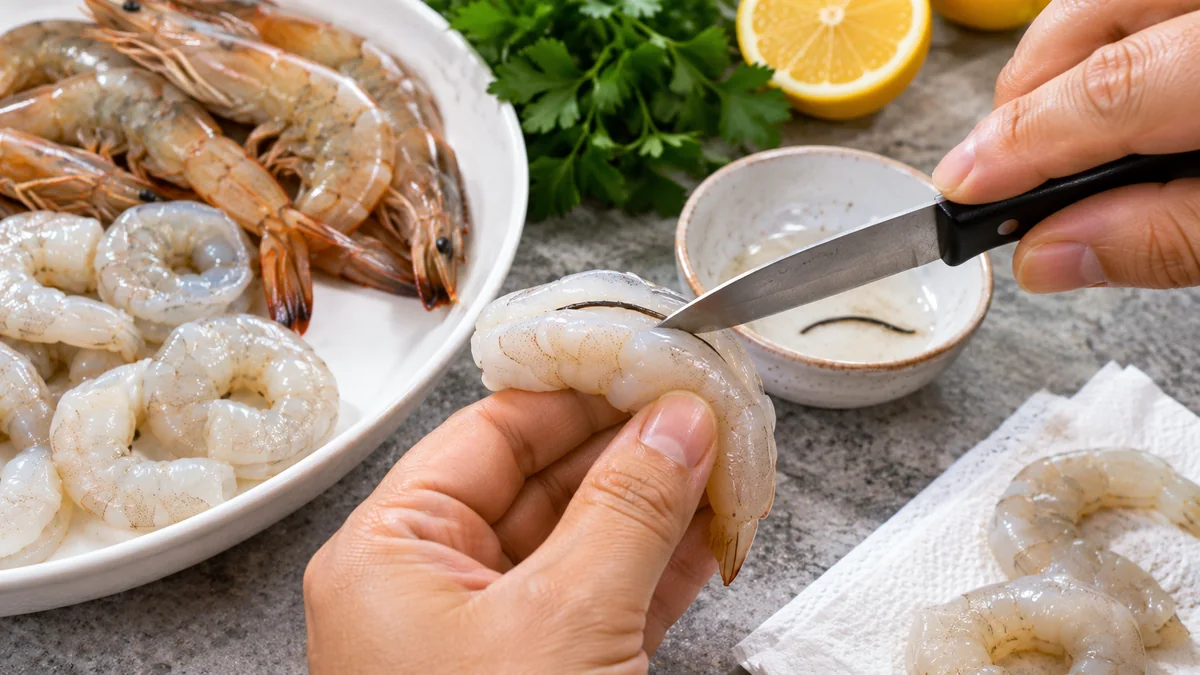
Learning how to devein shrimp makes seafood prep easier, whether you are planning a quick skillet dinner, a grilled platter, or chilled shrimp cocktail. The key is a shallow cut and a gentle pull, not aggressive trimming.
This guide covers peeled and shell-on shrimp, explains the dark line, and gives practical food-safety guidance so you can prepare shrimp confidently without wasting meat.
How to Devein Shrimp: The Quick Answer
Deveining shrimp means removing the dark digestive tract that runs along the back. It is usually a quality and appearance choice rather than an automatic food-safety requirement: the vein is edible, but it can look unappealing and sometimes contain grit. For a clean presentation, make a shallow cut along the back of each shrimp, lift the tract with the tip of a small knife or toothpick, and pull it out gently.
Rinse briefly only if necessary, then pat the shrimp thoroughly dry. Keep raw shrimp cold throughout the process and cook them to 145°F (63°C). You can peel first, or keep the shell on for extra protection during cooking. The method below explains both options without wasting the tender flesh.
What You Need Before You Start
Set a clean cutting board on a stable counter and place a small bowl beside it for discarded shells and veins. A sharp paring knife, a toothpick or skewer, paper towels, and a shallow tray of ice are enough. Kitchen shears are especially useful for shell-on shrimp. Choose raw shrimp that smell fresh and mild, not strongly fishy or ammonia-like. If they are frozen, thaw them safely in the refrigerator before cleaning.
For a faster thaw, seal them in a leakproof bag and submerge in cold water, changing the water as needed; cook promptly after a cold-water thaw. Never leave seafood thawing on the counter. Clean your hands, tools, and surfaces before and after handling raw shrimp, and keep them separate from ready-to-eat ingredients.
How to Devein Peeled Shrimp Step by Step
First, remove the head if attached, then peel away the legs and shell. Leave the tail on if you want a restaurant-style presentation, or remove it for bowls, soups, and pasta. Lay the shrimp curved-side down so its rounded back faces upward. With a sharp paring knife, make a shallow incision along the outer curve from just below the head end toward the tail. Cut only deep enough to expose the dark line; a deep cut can split the shrimp unnecessarily.
Slip the knife tip or a toothpick under the line and lift it carefully. Pull the tract away in one piece when possible. If it breaks, lift the remaining sections separately. Check the groove for visible grit, wipe with a damp paper towel or rinse quickly under cold water, and dry immediately. Repeat with the remaining shrimp, returning finished pieces to a chilled tray.
How to Devein Shrimp with the Shell On
Shell-on shrimp can be cleaned without peeling completely. Hold a shrimp securely, then use kitchen shears to snip along the top of the shell, following the outer curve from the head end toward the tail. Gently spread the shell just enough to see the back of the flesh. Make a very shallow incision if the tract is not already exposed.
Hook the vein with a toothpick and pull it free. Close the shell loosely around the shrimp and place it on ice. This approach works well for grilling or roasting because the shell helps shield the delicate meat from direct heat. For recipes that require a peeled texture, remove the shell after deveining. The choice depends on how you plan to serve the shrimp, not on a universal rule that one method is safer.
What Is the Black Line in Shrimp?
The familiar dark line on the shrimp’s back is its digestive tract. Its color varies with the animal’s diet and may appear black, brown, or nearly invisible. A second pale line along the underside is a different structure and generally does not need removal. People sometimes mistake the underside line for a second dirty vein and spend extra time cutting into perfectly good shrimp. Removing the back tract improves appearance and can prevent a gritty bite, especially with larger shrimp. A small shrimp with a barely visible tract is often cooked without deveining, while jumbo shrimp benefit most from the extra preparation. Regardless of whether the tract is removed, safe storage, avoidance of cross-contamination, and thorough cooking remain essential.
Should You Devein Every Shrimp?
For shrimp cocktail, elegant appetizers, and large shrimp served whole, deveining is worth the effort because the backs are visible. For finely chopped shrimp in dumplings or fritters, the visual benefit is smaller, although you may still prefer to remove the tract. Tiny salad shrimp are often sold already cleaned, and attempting to cut each one may cause more damage than improvement.
Check package wording: peeled does not always mean deveined, and tail-on does not tell you whether the tract has been removed. If you are buying shrimp at a fish counter, ask whether they are cleaned and whether the quoted weight includes shells. Paying slightly more for properly cleaned shrimp may save substantial preparation time when cooking for a crowd.
Common Mistakes and How to Avoid Them
The most common mistake is cutting too deeply. A shallow incision gives access to the tract while keeping the shrimp plump. Another mistake is tugging forcefully on a fragile vein: lift it gently and remove any broken portions with the knife tip. Working with warm shrimp is also unwise; return batches to the refrigerator while you prepare the rest.
Avoid soaking peeled shrimp in water for long periods because it can dilute flavor and make the surface wet. Do not use the same board or knife for raw shrimp and salad vegetables without washing them thoroughly first. Finally, do not confuse deveining with cooking. A beautifully cleaned shrimp is still raw and needs appropriate heat treatment before it is ready to eat.
How to Prepare Shrimp for Different Cooking Methods
For pan-searing, peel and devein shrimp, then dry them well so their surfaces brown instead of steaming. For grilling, consider leaving the shell and tail attached, especially with larger shrimp, and thread them onto skewers to prevent spinning. For shrimp cocktail, peel and devein before gently poaching, or cook in the shell and peel afterward according to your preferred texture. For stir-fries, peeled and deveined shrimp are easier to eat and absorb seasoning quickly. For soups, keep shrimp chilled and add them near the end to avoid a rubbery texture. The cleaning technique stays the same, but the final shell and tail choices should match the finished dish.
Food Safety: Storage, Thawing, and Cooking
Refrigerate raw shrimp promptly at 40°F (4°C) or colder and follow the package’s use-by guidance. If the shrimp are frozen, use a safe thawing method rather than leaving them at room temperature. Wash hands with soap after handling raw seafood, sanitize utensils and counters, and avoid dripping raw shrimp liquid onto other foods. Cook raw shrimp until the flesh is pearly and opaque, as specified by FDA safe food handling guidance.
A food thermometer can help when appropriate, but do not rely on a fixed cooking time or translucent-looking meat. Cooked shrimp should be refrigerated within two hours, or within one hour if the surrounding temperature is above 90°F (32°C). For additional practical guidance, see our safe shrimp thawing guide and cooked shrimp storage guide. These are separate stages of preparation, and each deserves its own attention.
Batch-prep workflow: For a large bag of shrimp, place only one small portion on a clean chilled tray while the rest stays refrigerated. Set a separate bowl aside for shells and discarded tracts, use a shallow cut so the back stays intact, and transfer each prepared shrimp immediately to a covered chilled container. Wash the knife, board, and sink area thoroughly with soap and water after handling raw seafood. This keeps the preparation organized and helps prevent raw juices from contacting produce or ready-to-eat foods.
When to Buy Pre-Deveined Shrimp
Pre-deveined shrimp can be a practical choice for busy weeknights, especially when preparing several pounds. Read the label carefully to see whether the shrimp are raw or cooked, peeled or shell-on, and whether the tails remain attached. Frozen raw shrimp can be excellent if handled and thawed correctly; freezing alone is not a sign of inferior quality.
Compare prices by usable meat rather than package weight when shells are included. If a recipe calls for shrimp with shells on, pre-peeled shrimp may not give the same grilling protection. For a fast dinner, however, already peeled and deveined shrimp reduce prep work and make it easier to move straight to a recipe such as air fryer shrimp with garlic and lemon or garlic lemon butter shrimp scampi.
Frequently Asked Questions
Is it safe to eat shrimp without deveining?
The digestive tract is generally edible, but many cooks remove it to improve appearance and avoid possible grit. Proper handling and cooking matter more for food safety than the cosmetic step of deveining.
Can I devein shrimp without cutting the back?
Sometimes. Insert a toothpick beneath the tract near the head end and gently lift it out. The method works best when the tract is intact and visible, but it is less reliable than a shallow cut.
Do I need to remove the white line underneath?
No. The pale line on the underside is not the dark digestive tract and normally does not need to be removed.
Should I peel shrimp before deveining?
Either order works. Peeling first is easiest for most beginners; keeping the shell on can be useful for grilled or roasted shrimp.
Can I devein frozen shrimp?
Fully thaw shrimp safely first. Partially frozen flesh is harder to handle accurately, increasing the chance of uneven cuts and damage.
Final Checklist Before Cooking
Look over each shrimp once more for visible fragments of the tract or shell. Pat the pieces dry, keep them refrigerated until needed, and choose a cooking method that suits their size. Small shrimp cook quickly, while jumbo shrimp need a little more attention to their thickest section. If you are preparing a large batch, clean a few at a time rather than leaving the entire bowl on a warm counter. The goal is not a complicated knife technique: it is clean, intact shrimp ready for a good meal. For more ideas after preparation, browse our shrimp recipe collection. A few minutes of careful prep can make the final dish look more polished without sacrificing texture or flavor.