
How to Store Cooked Shrimp Safely: Fridge, Freezer, and Leftovers
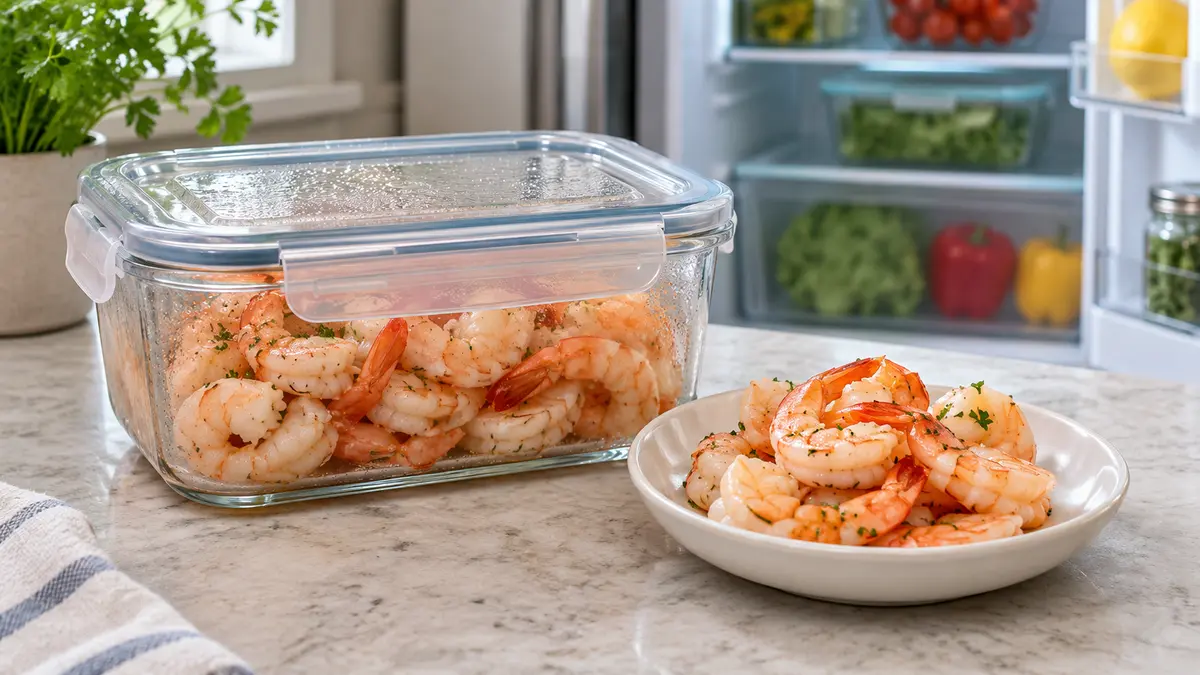
How to store cooked shrimp safely comes down to prompt cooling, a cold refrigerator, and a clear deadline. Whether you have leftovers from dinner or are preparing shrimp for a party, these steps protect both food safety and the tender texture you worked to achieve.
Why storage starts before refrigeration
Cooked shrimp can taste delicate and sweet when freshly prepared, but poor handling quickly undermines both texture and safety. The important distinction is between cooling shrimp promptly and leaving a platter out until it feels convenient to put away. Refrigeration slows bacterial growth; it does not reverse time spent at unsafe temperatures. Plan where the shrimp will go before you start cooking, especially when preparing a large batch for a party. Clean, shallow containers, available refrigerator space, and a reliable thermometer make this process straightforward. This guide applies to fully cooked shrimp, whether peeled or shell-on, served plain or as part of a chilled dish.
How long can cooked shrimp stay in the refrigerator?
For cooked shrimp handled safely, the practical refrigerator window is three to four days at 40°F (4°C) or colder. Count from the day the shrimp was cooked, not from the day it was first served or moved into another container. A refrigerator thermometer is more reliable than the temperature dial. If you bought shrimp already cooked, check its use-by information and how it was stored; the three-to-four-day guideline is not permission to extend an earlier package deadline. When in doubt about the handling history, discard it rather than trying to judge safety by smell alone.
The two-hour rule and hot-weather exception
Refrigerate perishable cooked shrimp within two hours of cooking or removal from refrigeration. When the surrounding temperature is above 90°F (32°C), that window shrinks to one hour. These limits apply to the cumulative time shrimp spends outside safe cold holding, not a fresh two-hour allowance every time a platter returns to the table. For parties, place serving bowls over ice and replenish them from a chilled reserve instead of leaving the whole batch out. If shrimp has exceeded the safe time limit, refrigerating it afterward does not make it safe again.
Cool shrimp quickly without soaking it
Spread freshly cooked shrimp in a shallow layer so heat can escape promptly. A small quantity may go into the refrigerator in a shallow container while still warm; avoid packing a large, steaming mass into a deep, sealed bowl. If the recipe calls for chilled shrimp cocktail, an ice bath can stop cooking quickly, but drain the shrimp thoroughly afterward. Excess surface water dilutes flavor and creates a soggy texture. Use clean utensils and avoid returning cooked shrimp to a plate that previously held raw seafood. The goal is prompt cooling, not prolonged soaking.
Choose a container that protects texture
A clean, food-safe container with a well-fitting lid is usually the simplest choice. Arrange shrimp in a shallow layer or two rather than crushing them under a heavy stack. For particularly moist shrimp, pat dry gently with clean paper towels before storage. Do not leave them uncovered beside strongly scented foods; shrimp readily picks up refrigerator odors. Label the container with the cooking date. Store it on a refrigerator shelf where the temperature remains stable, rather than in the door, which warms each time it opens.
Store peeled and shell-on shrimp differently?
The same food-safety temperature and time limits apply to peeled and shell-on cooked shrimp. Shells can provide some physical protection from drying, while peeled shrimp are more convenient for salads and sandwiches. Neither form is shelf-stable. If the shrimp was cooked in a seasoned broth, drain it before refrigeration unless the finished dish specifically calls for storage in liquid. Keep cocktail sauce or creamy dressing separate when possible so shrimp stays firm and the sauce retains its intended consistency.
Can you freeze cooked shrimp?
Yes. Freeze cooked shrimp promptly in freezer-safe packaging if you will not eat it within the refrigerator window. Pat the shrimp dry, portion it into amounts you will actually use, and press out excess air from a freezer bag or use an airtight freezer container. Label the date and keep the freezer at 0°F (-18°C) or below. Properly frozen food remains safe while continuously frozen, although flavor and texture gradually decline; for best eating quality, aim to use cooked shrimp within roughly three months. Avoid repeated thawing and refreezing, which can make shrimp watery.
Thaw frozen cooked shrimp safely
The safest routine is to thaw cooked shrimp in the refrigerator in a covered container so any drips stay contained. For faster thawing, seal the shrimp in a leakproof bag and submerge it in cold water, changing the water frequently; use it promptly afterward. Never thaw on the counter or in warm water. Microwave thawing is generally poor for cooked shrimp because the edges can overcook before the center loosens. For a detailed explanation of safe seafood thawing, see how to thaw frozen shrimp safely.
How to tell when stored shrimp should be discarded
An unpleasant sour, ammonia-like, or unusually fishy odor, visible mold, or a slimy surface are clear reasons to throw shrimp away. However, dangerous bacteria do not always produce obvious warning signs. Shrimp can look and smell normal even after unsafe storage, so the refrigerator temperature, elapsed time, and handling history matter more than a sniff test. Do not taste a questionable piece to check it. If you cannot establish when it was cooked or whether it remained cold, the safest choice is disposal.
Serving stored shrimp cold
For shrimp cocktail, transfer only the portion you plan to serve to a chilled platter, keeping the rest refrigerated. A bowl nested in ice helps maintain temperature during a gathering, but monitor the food itself rather than assuming decorative ice is sufficient. Keep utensils clean and avoid combining leftover shrimp from the table with untouched shrimp in storage. If preparing shrimp cocktail from raw shrimp, our air fryer shrimp with garlic and lemon offers a different hot-serving option; use an appropriately chilled cooked-shrimp preparation for classic cocktail service.
Reheating leftovers without making them rubbery
Cooked shrimp is already fully cooked, so extended heating is especially likely to toughen it. When reheating leftovers, heat them thoroughly to 165°F (74°C), using a food thermometer when practical, and avoid repeatedly warming the same batch. Add shrimp near the end of a hot sauce or soup rather than simmering it for a long period. If the shrimp has already spent too long at room temperature, reheating is not a reliable fix. Discard unsafe leftovers instead of trying to rescue them.
A simple storage timeline
On cooking day, cool promptly and refrigerate in a shallow covered container. During days one through three, use clean utensils and return unused portions to the refrigerator immediately. By day four, eat the shrimp only if its storage history has been consistently safe, or discard it; freezing earlier is preferable to waiting until the last moment. For events, separate the serving portion from the reserve and track time out of refrigeration. These habits are more useful than any single visual test because they make the storage history easy to verify.
Frequently asked questions
How long does cooked shrimp last in the fridge?
Generally three to four days when refrigerated promptly at 40°F (4°C) or colder.
Can I eat cooked shrimp after five days?
Five days exceeds the usual recommended refrigerator window; discard it.
Can I freeze cooked shrimp in its shell?
Yes. Package it airtight, label the date, and thaw safely before use.
Is shrimp safe if it smells fine?
Not necessarily. Harmful contamination may not produce a noticeable odor.
Can I leave shrimp cocktail on a buffet?
Keep it properly chilled and follow the two-hour rule, or one hour above 90°F (32°C).
Bottom line: refrigerate promptly, use within three to four days, and freeze early if your plans change. Safe handling matters more than a smell test.