
Uni Pasta with Garlic, Lemon and Sea Urchin
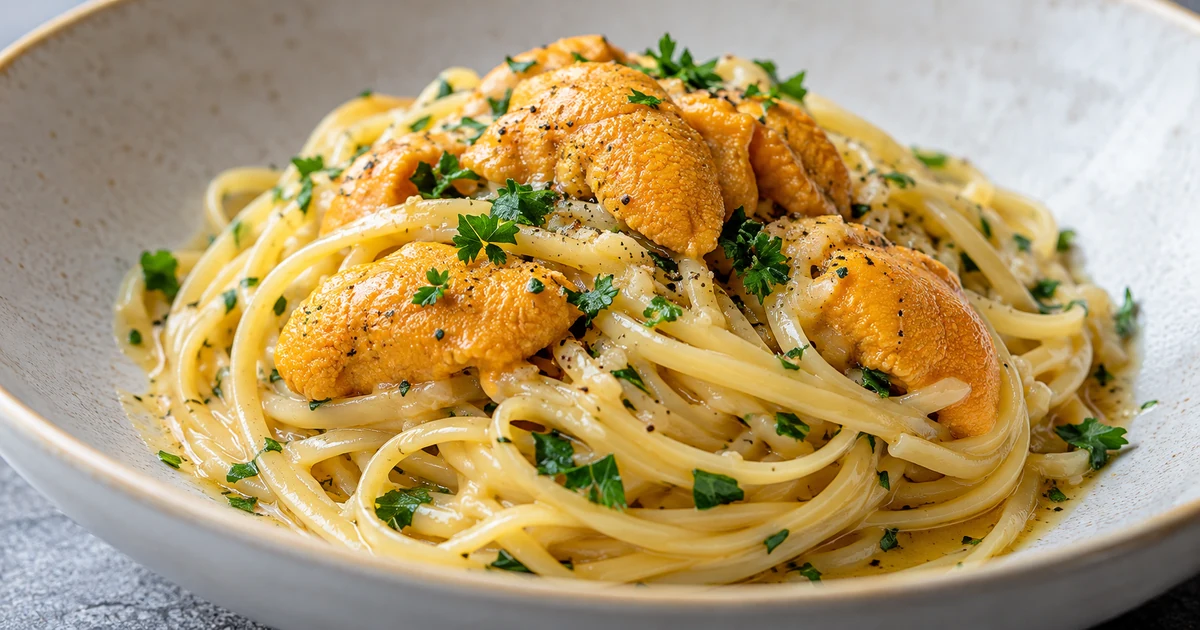
Uni pasta is a different kind of seafood pasta. The sea urchin, often called uni, contributes a creamy ocean-like flavor that does not require cream or a heavy tomato sauce. A little butter, garlic, lemon and starchy pasta water can carry the flavor through linguine without turning the dish into a general seafood medley. The challenge is restraint: too much heat damages delicate uni, while too much lemon or garlic hides what makes it distinctive.
This recipe assumes you have purchased commercially prepared sea urchin from a reputable refrigerated supplier. It is not a guide to opening live animals or deciding if an unknown urchin is safe to eat. Some uni remains only gently warmed, and the topping is chilled. Because it may be raw or undercooked, the finished dish is not appropriate for people who need to avoid such seafood. Always follow the supplier’s instructions and your own food-safety requirements.
What Uni Actually Is
Uni is the edible reproductive tissue of a sea urchin, commonly sold as small golden, yellow or orange lobes. It is often described as sea urchin roe, although that is a convenient culinary term rather than a precise description of only eggs. Depending on species, diet and handling, it can taste mild, sweet and creamy or more strongly marine.
The Maine Sea Grant sea urchin guide explains the color and texture clues buyers should examine, and notes that uni can be folded into creamy pasta with garlic, lemon and herbs. For pasta, quality matters because the uni is a main flavor, not a seasoning masked by several other seafood ingredients. Buy it properly chilled and handle it as a perishable seafood product.
Shopping for Commercially Prepared Uni
Look for a known supplier, clear labeling, a protected cold chain and a short handling window that you can respect. Uni may be sold chilled or frozen, sometimes with a solution that helps maintain appearance. Read the packaging to understand whether the product is raw, ready to eat, pasteurized, previously frozen or subject to another treatment.
These labels are not interchangeable. If the package is leaking, has been stored unrefrigerated, has passed its use-by date or looks unlike its normal appearance, do not improvise a rescue method. This recipe calls for about three ounces for two people; smaller portions can make a more subtle sauce, but they still require safe storage. Never substitute unknown self-harvested urchin or assume a restaurant-quality photograph establishes a product’s safety.
Why the Sauce Needs Almost No Cream
Sea urchin naturally has a rich, soft texture. When a portion is gently stirred through warm fat and starchy pasta water, the sauce develops body without heavy dairy cream. Butter adds a little gloss and olive oil keeps it fluid. Garlic is softened rather than browned, because dark garlic can dominate an ingredient as delicate as uni. Lemon zest gives aroma while a measured amount of juice balances the marine flavor. This is not a carbonara and it does not need egg yolks or cheese. Thick cream can also conceal the color of the uni and encourage readers to keep heating in an effort to thicken it. The goal is a thin but clinging sauce that makes the pasta glossy, not a pool at the bottom of the plate.
Ingredient Quantities for Two Servings
Eight ounces of dry linguine is a practical main-course amount for two diners. Approximately three ounces of uni creates a recognizable seafood flavor without assuming an exceptionally large or expensive package. Reserve enough to place a little on top at the end, where it remains identifiable in appearance and texture. Two tablespoons of butter and one tablespoon of olive oil are enough to carry the sauce. Start with two teaspoons of lemon juice, then adjust gradually only after the pasta is combined. A half cup of reserved cooking water is a supply rather than a fixed amount you must use; the pasta may need only a few spoonfuls. Package saltiness varies, so season late instead of pouring extra salt into the sauce automatically.
Cook the Pasta So the Texture Stays Balanced
Choose a pasta shape that catches a light sauce, such as linguine, spaghetti or thin tagliatelle. Boil it until just al dente and save some cooking water before draining. That water is valuable because dissolved starch helps the butter, oil and juices coat the noodles without separating. Finish the pasta directly in the warm skillet, but do not keep it on high heat once the sea urchin is added. If you cook pasta a minute longer than intended, do not compensate with a longer toss in the sauce; that makes it softer. Time your preparation so the uni stays refrigerated until the pasta is nearly finished. A warm serving bowl is optional, but a hot skillet left on the burner is not the right place to fold in delicate uni.
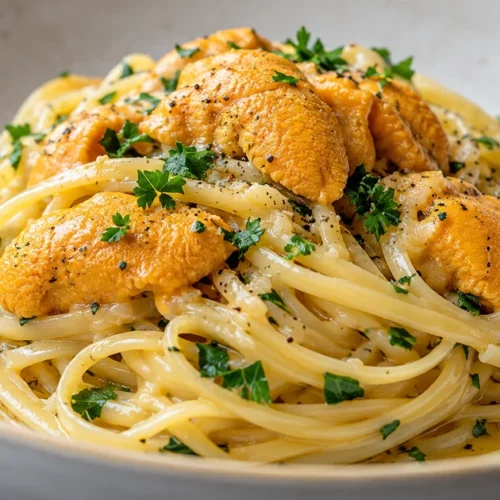
The complete measured ingredients, sequence and servings are recorded in the recipe card below. Save the exact quantities there rather than estimating from the photographs.
Uni Pasta with Garlic, Lemon and Sea Urchin
Ingredients
- 8 oz linguine dry, about 225 g
- 3 oz commercially prepared sea urchin uni about 85 g; refrigerated and handled as directed
- 2 tbsp unsalted butter
- 1 tbsp extra-virgin olive oil
- 2 cloves garlic finely minced
- 1 tsp finely grated lemon zest
- 2 tsp fresh lemon juice add to taste
- 0.5 cup reserved hot pasta cooking water use as needed
- 1 tbsp flat-leaf parsley finely chopped
- 0.25 tsp freshly ground black pepper
- 1 tsp kosher salt for pasta water if desired; adjust to product saltiness
Instructions
- Refrigerate commercially prepared uni until ready to use; do not rinse or open live sea urchins at home for this method. Keep all utensils and the work surface clean.
- Bring a pot of water to a boil and cook linguine until just al dente according to package directions. Reserve one half cup of starchy cooking water before draining.
- In a large skillet over low heat, warm olive oil and butter. Add garlic and stir for 30 to 60 seconds until fragrant but not brown. Turn off the heat.
- Add lemon zest and 2 tablespoons reserved pasta water. Gently fold about two-thirds of the uni into the warm sauce off heat until it loosens; do not boil.
- Add drained linguine and toss gently with enough reserved starchy water to make a glossy, lightly coating sauce. Add lemon juice to taste and black pepper.
- Divide between two clean bowls and add the remaining chilled uni and parsley on top. Serve immediately. This gently warmed preparation is not a fully cooked seafood dish.
Notes
Garlic and Lemon without Overpowering the Sea Urchin
Finely mince two garlic cloves and warm them in butter and olive oil over low heat. You want a fragrant fat with no dark bits. Add lemon zest off heat so its volatile fragrance remains noticeable. Lemon juice is more assertive, so wait until after the sauce has coated the pasta before using the full amount. Salt is another ingredient to approach cautiously because chilled uni can vary in natural salinity and preparation. Black pepper and parsley belong as accents rather than a coating of herbs. Avoid competing ingredients such as olives, capers or dried chili in this particular dish. Those work well in other pastas, including SABSEA’s sardine pasta with tomatoes and capers, but would obscure sea urchin here.
When and How to Add Uni
Move the pan off the heat before folding approximately two-thirds of the uni into a few spoonfuls of warm pasta water and garlic butter. Stir gently enough to keep some texture, then add the drained pasta and toss until glossy. Boiling or frying the sea urchin can make the sauce grainy and change its delicate aroma. The small portion reserved for topping remains chilled until service. This is an intentional texture choice, not a claim that the recipe fully cooks the seafood. The FDA advises that fully cooking seafood is the safest route, especially for vulnerable diners. If you require fully cooked seafood, choose a different pasta recipe with a clearly defined cooked fish or shellfish method rather than assuming that tossing raw uni in hot noodles meets a safe endpoint.
Seafood Safety Is Part of This Recipe
Use the FDA’s seafood selection and handling guidance for refrigeration, cross-contamination prevention and serving times. Keep commercially prepared uni at 40°F (4°C) or below until needed unless the specific product label tells you otherwise. Clean knives, bowls and counters before handling ready-to-eat seafood. This recipe uses gently warmed and chilled uni rather than fully cooked seafood. Pregnant diners, people with weakened immunity, young children and other people advised to avoid raw or undercooked seafood should not treat this dish as a safe exception. Previously frozen does not guarantee that all harmful microorganisms have been eliminated. Follow medical guidance appropriate to the diner.
A Practical Two-Person Cooking Timeline
Set up a clean serving area and measure butter, olive oil, garlic, zest and parsley while the uni remains refrigerated. Start the pasta water, then soften garlic only when the pasta is close to done. Reserve cooking water and drain the linguine. Turn off the skillet heat, take the uni out briefly and fold in the measured sauce portion. Add pasta, loosen with a few spoonfuls of the reserved water, then taste and adjust with lemon. Plate immediately and return the remaining uni package to refrigeration. The total active cooking time is short; most mistakes happen when a pan is left unattended at high heat or the roe is sitting out while another course is prepared. This dish is best assembled for immediate serving rather than a long buffet.
What to Serve with Uni Pasta
A lightly dressed green salad, steamed greens or simple cucumber slices can complement the richness without competing with uni. Keep the plate uncluttered and serve portions in shallow warm bowls if you like. If you are planning a seafood dinner for guests with mixed preferences, offer a separate fully cooked alternative, such as SABSEA’s garlic lemon shrimp scampi, which uses a conventional cooking method. This also helps diners who choose not to eat raw or lightly cooked seafood. Avoid assuming everybody is comfortable with the sourcing or texture of uni. A short explanation of the ingredient and how you handled it lets guests make an informed choice.
Troubleshoot Broken Sauce or Excessive Sea Flavor
If the sauce looks greasy rather than creamy, add a tablespoon of hot starchy pasta water at a time and toss gently off heat. If the sauce looks grainy, it may have been heated too strongly; avoid further boiling and serve promptly rather than making repeated attempts to thicken it. If lemon overwhelms the uni, the better fix next time is less juice, not extra salt or dairy. A bitter or unpleasantly strong seafood taste is not something to conceal with garlic; discard a product if freshness is doubtful. If the pasta is dry, a small amount of pasta water can improve coating. If it is watery, do not cook the sea urchin repeatedly to evaporate liquid; reserve less water next time. Control the sauce before the uni goes in.
Storage and Leftovers
This is deliberately a cook-and-serve dish. Leftover prepared uni should be stored exactly as directed by its packaging, while mixed pasta is less suitable for later reheating because the lightly warmed seafood component has not been brought to a verified fully cooked temperature. Do not leave plated bowls at room temperature for extended periods. The FDA advises prompt refrigeration of seafood and cautious handling of perishable cooked food. For a safer, better-tasting result, scale the pasta quantity to the number of people actually eating and assemble only the portions you can serve immediately. If in doubt about refrigeration, discard rather than relying on appearance or smell alone. This limitation is a practical reason to keep the recipe to two servings rather than a large party-sized batch.
Frequently Asked Questions
Is uni pasta made with raw sea urchin?
This version gently warms some commercially prepared uni and adds a chilled topping. It is not verified as fully cooked seafood, so observe the appropriate food-safety precautions.
Can I use frozen uni?
Only if the supplier confirms it is suitable for the intended preparation. Thaw and handle it strictly according to its package instructions and maintain the cold chain.
Can I substitute cream for the pasta water?
You can, but this version uses starchy cooking water and butter to preserve the sea urchin flavor. Cream changes the sauce substantially.
Why is my uni sauce grainy?
Too much heat or aggressive mixing can damage the delicate texture. Remove the pan from heat before folding the uni into the warm pasta.
Can pregnant people eat gently warmed uni pasta?
This preparation does not establish a fully cooked seafood temperature. People advised to avoid raw or undercooked seafood, including pregnant diners, should choose a thoroughly cooked alternative.
Explore related seafood methods and ingredients in the SABSEA seafood recipe collection and choose recipes that match the products and handling instructions available to you.