
Garlic Butter Whole Crawfish with Lemon and Parsley
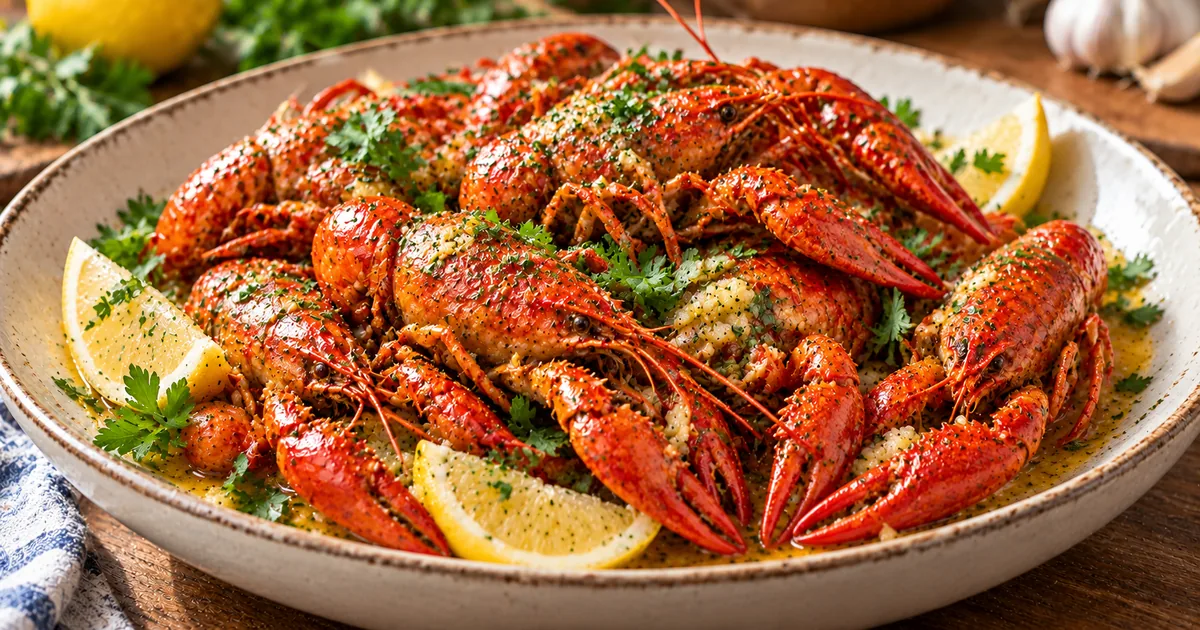
Whole crawfish have a dramatic appearance, but the best way to serve them at home does not require a giant boiling pot or a complicated spice blend. In this garlic butter crawfish recipe, fully cooked whole crawfish are warmed carefully, then coated in fragrant garlic butter, fresh parsley and lemon. The shell-on presentation is part of the appeal: diners peel the tails as they eat, while the bright sauce seasons each bite without making the seafood taste heavy.
This article is specifically about pre-cooked, whole freshwater crawfish, not raw live animals and not loose peeled crawfish tails. Those products need different preparation methods and timings. Starting with safely cooked and properly refrigerated crawfish makes the process manageable, but it also means reheating rather than the original cooking is the critical food-safety step. Read the label on the product you buy, keep it chilled until needed, and use a thermometer when reheating previously cooked seafood.
What Makes This Garlic Butter Crawfish Recipe Different
The defining feature of the dish is the whole cooked crawfish. Small lobster-like bodies, segmented tails and two prominent claws distinguish crawfish from shrimp on the serving platter. Their edible tail meat is naturally sweet, with a delicate texture that benefits from a sauce rather than an extended second cooking. The butter brings richness, but lemon and fresh herbs prevent the finished dish from tasting flat. Guests can peel each shell at the table and dip the extracted meat in a small bowl of the warm butter sauce.
A traditional Louisiana-style crawfish boil generally seasons whole crawfish during their original cooking, often with additional vegetables. Here the crawfish have already been cooked by the supplier, so the method is shorter and its seasoning happens at the end. This is also not the same as a pan of garlic lemon butter shrimp scampi. Shrimp are usually served ready to eat, whereas a whole crawfish platter asks diners to separate the edible meat from the shells.
Buy the Right Kind of Whole Crawfish
Look for whole, pre-cooked crawfish sold frozen or refrigerated by a reputable seafood supplier. The package should clearly identify the product as crawfish or freshwater crayfish and state that it is cooked. Crawfish can also be called crayfish or crawdads in different places, while some international markets use related terms for other crustaceans. Do not assume that a product labeled lobster, langoustine or shrimp will behave identically in this recipe. Look for whole bodies, small tails and visible claws when choosing a shell-on product.
Check whether the crawfish were boiled with a salty seasoning blend. Already seasoned seafood may require substantially less additional flavoring than an unseasoned product. For the measured garlic butter version here, choose plain cooked crawfish when possible. Read storage and use-by instructions, note the net weight and inspect the product for freezer damage. A bag containing large quantities of ice crystals may indicate poor storage, so buy from a source whose handling practices you trust rather than relying on the red color of the shell.
Why This Recipe Uses Pre-Cooked Crawfish
Cooking live crawfish safely is a separate process that involves a large pot, accurate timing, careful handling and local sourcing rules. This recipe starts after that step: the whole crawfish must already be completely cooked. A frozen cooked product can be thawed overnight in the refrigerator while still packaged according to the label. Do not leave a large bag of seafood on the counter through the afternoon. The goal is to begin with safe seafood at a controlled temperature and complete the recipe with one deliberate reheating stage.
For leftovers or previously cooked and cooled food, USDA guidance on reheating recommends reaching at least 165°F (74°C) throughout. A food thermometer is more reliable than deciding that the shells look red enough, because cooked shellfish already look red before being heated again. Follow any specific package directions when they are more restrictive. If the packet is marked raw or partially cooked, do not substitute it into this recipe without a method designed for that product.
Ingredients and Sauce Proportions
For four small servings, start with about two pounds of whole cooked crawfish. Melt four tablespoons of unsalted butter with one tablespoon of olive oil, then add four finely minced garlic cloves. One lemon provides fresh juice and wedges, while two tablespoons of chopped flat-leaf parsley bring a bright finish. A pinch of black pepper is useful; a modest amount of smoked paprika is optional, but it should not overwhelm the seafood. Keep extra salt off the counter until you have tasted the crawfish themselves.
The sauce is intentionally light relative to the weight of the seafood because much of that weight is shell. The measured butter coats rather than immerses the crawfish. If the product is heavily pre-seasoned, you may prefer less sauce and no additional salt. If it is plain, lemon and garlic usually provide sufficient lift. A small bowl of reserved butter on the table gives diners control over how rich each peeled bite becomes. The actual ingredient amounts and sequence are repeated in the WP Recipe Maker card below.
Thaw and Drain without Damaging the Meat
If the crawfish are frozen, thaw them in the refrigerator following the packet instructions. Put the sealed pack on a tray to catch any liquid and keep it away from ready-to-eat vegetables. Do not microwave a large pile of shell-on crawfish until the outer pieces are overcooked while the middle stays frozen. Once thawed, drain accumulated liquid and inspect the contents. Crawfish should smell clean and mildly marine; strong sour or ammonia-like odors are reasons not to cook or serve them.
Gently blot the shell surfaces if they are very wet. Excess water dilutes the butter, and splattering makes it difficult to soften garlic without burning it. Do not aggressively squeeze the tails or twist shells apart before serving if your goal is a whole-crawfish platter. The shell keeps the identity of the crustacean clear and provides the characteristic peeling experience. Any preparation tools used on raw or questionable seafood should be washed separately before handling lemon wedges and parsley.
Reheat the Whole Crawfish Safely
A large covered sauté pan or wide pot allows warm steam to reach the crawfish without scorching the shells. Add a small amount of water, arrange the thawed cooked crawfish in the pan and cover. Warm them over medium heat, turning gently with clean tongs so the upper and lower layers heat evenly. The precise time depends on the volume, temperature and size of the crawfish. Rather than promising that four minutes always works, check that the edible meat in the thickest tail has reached the safe reheating target for leftovers before serving.
If the pan is crowded, divide the crawfish between two batches and keep already heated portions safely hot while the second batch finishes. Avoid heating the garlic butter for the full reheating period. Garlic is easily scorched and can make the sauce bitter; it belongs in a separate small pan while the seafood is warming. Once the crawfish are evenly heated, drain any excess steaming liquid and transfer them to a warm serving bowl, ready for the finishing sauce.
Make Garlic Butter without Burning Garlic
Set a small skillet over medium-low heat, melt four tablespoons of unsalted butter with the olive oil, and add finely minced garlic. Stir frequently for roughly one minute until fragrant and pale. Do not wait for deep brown garlic. Browned bits can taste harsh against the subtle sweetness of crawfish meat. Add a pinch of black pepper and, if desired, a very small amount of paprika. Take the pan off the heat before adding fresh lemon juice so the citrus remains lively rather than simmering down.
Parsley is best added once the butter is no longer aggressively bubbling. This keeps its color and fresh taste. If you use more lemon than the measured juice, increase it at the table rather than in the skillet. The goal is a sauce with three easy-to-identify flavors: butter, garlic and lemon. A sauce that tastes strongly salty or spicy in the pan can become even more pronounced once paired with seasoned crawfish, so make a small taste adjustment before coating the entire platter.
Coat and Serve the Crawfish
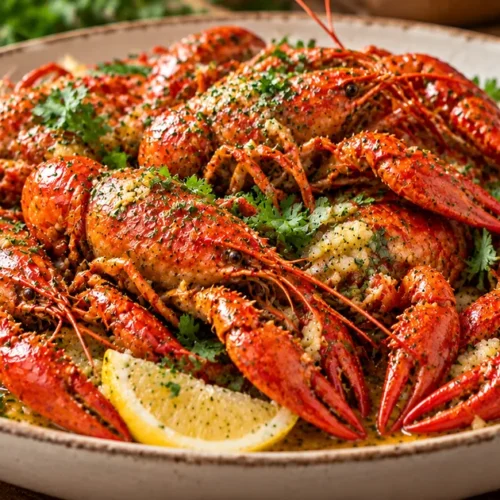
Transfer the warmed whole crawfish to a clean shallow bowl or platter and pour about three quarters of the garlic butter evenly across them. Turn them gently so the shells glisten and the aromatics reach all sides. Scatter chopped parsley over the top and tuck lemon wedges around the rim. Serve immediately, with the remaining butter in a little dish for dipping. The large claws, antennae and segmented tails should remain visible rather than hidden underneath a thick layer of sauce.
Offer a separate empty bowl for discarded shells and plenty of napkins. Whole crawfish are a hands-on meal; that is a feature rather than a flaw. The tail meat is the main edible portion for many diners. Show anyone unfamiliar with crawfish how to hold the body, twist off the tail and carefully peel the segments. If serving children, peel the meat for them rather than leaving them to handle small sharp shell pieces. Encourage guests to avoid eating parts they do not recognize.
How Much Whole Crawfish per Person?
Two pounds of shell-on cooked crawfish make four appetizer servings or two modest main-course servings, depending on the size of the crustaceans and appetite. The shells account for a substantial share of the total weight, so it is a mistake to treat two pounds of whole crawfish as equivalent to two pounds of boneless fish. If you need a hearty dinner for four, increase the crawfish quantity and the sauce proportionally, and add a substantial side dish such as rice, potatoes or a fresh salad.
If you are comparing prices, pay attention to whether the seller quotes whole weight or peeled tail weight. Peeled tails are more convenient to eat, but they produce a different presentation and need a shorter finishing time. For a party with both experienced and first-time crawfish eaters, preparing a little extra can be wise. Do not compensate for uncertainty by cooking a huge volume of seafood far in advance; hot holding and safe storage matter more than having an oversized table display.
What to Serve with Garlic Butter Crawfish
Plain rice is useful for catching any lemon garlic butter that runs down the platter, while roasted potatoes make a more substantial family meal. A crisp cucumber salad adds contrast without another rich sauce. If you are already planning a broader seafood table, the site’s steamed mussels with garlic and lemon use a related citrus profile but a very different cooking technique, and a Lowcountry boil provides ideas for vegetable accompaniments and larger gatherings.
Avoid covering the table with additional salty dips. Many commercial boiled crawfish products have been seasoned before freezing, and the garlic butter is flavorful enough to carry the dish. Bring fresh lemon to the table, a little extra parsley and a bowl of plain cooked grains. The finished plate should let guests recognize both the seafood and the sauce. Pairing the shells with simple sides also makes cleanup easier: one dish for edible meat, one for spent shells, and plates that can be cleared between courses.
Common Problems and Practical Fixes
Rubbery meat usually indicates that cooked crawfish have been heated too aggressively or for too long after they were already fully cooked. Reheat until the safe temperature is reached, then stop. Dry sauce usually means there was not enough liquid or the butter remained over high heat too long. Make the sauce in a separate small skillet and reserve some for serving. A greasy pool in the bottom of the bowl is the opposite problem; reduce the butter next time rather than adding more seasoning to disguise the richness.
If the dish tastes very salty, the crawfish may have been pre-seasoned. A fresh squeeze of lemon can brighten the flavor but will not remove the sodium. Choose plain cooked seafood for the next batch and keep added salt optional. If you are uncertain whether a package contains raw or cooked seafood, pause the recipe and consult the label instead of guessing from appearance. Proper product identification also matters: a small prawn is not automatically a crawfish just because both have red shells after cooking.
Storage, Leftovers and Responsible Handling
Refrigerate leftover cooked crawfish promptly in shallow covered containers, separating the edible meat from shells if that makes storage more convenient. USDA guidance generally places cooked seafood within a three- to four-day refrigerated storage window when it has been handled safely, but any shorter package instructions take priority. Do not leave the whole platter on a warm table for hours. For best texture, prepare only the quantity you expect to eat and avoid repeated cycles of warming, cooling and reheating.
When you do reheat leftovers, the same 165°F (74°C) target for previously cooked and cooled food applies. Check a piece of edible tail meat rather than an empty shell, and avoid using the shell color as a thermometer. If any seafood smells off, was stored improperly or has an unknown history, discard it rather than trying to fix it with garlic, citrus or more heat. Safe sourcing, correct product identification and prompt refrigeration allow this simple whole-crawfish dish to stay enjoyable and repeatable.
Garlic Butter Whole Crawfish with Lemon and Parsley
Ingredients
- 2 lb whole fully cooked freshwater crawfish thawed in refrigerator if frozen; plain/unseasoned preferred
- 4 tbsp unsalted butter for garlic sauce
- 1 tbsp olive oil for garlic sauce
- 4 cloves garlic finely minced
- 1 whole lemon juice for sauce and wedges to serve
- 2 tbsp flat-leaf parsley finely chopped
- 0.25 tsp ground black pepper to taste
- 0.125 tsp smoked paprika optional
- 0.25 cup water for steaming/reheating
Instructions
- Use fully cooked whole crawfish only. If frozen, thaw in the refrigerator following the package instructions. Drain and inspect. Do not use raw or live crawfish for this specific reheating recipe.
- Place cooked crawfish in a large wide lidded pan with 1/4 cup water. Cover and warm over medium heat, turning gently until edible tail meat reaches at least 165°F (74°C) throughout when reheating cooked and cooled leftovers. Work in batches if crowded.
- Separately melt butter with olive oil over medium-low heat. Add minced garlic and stir about 1 minute until fragrant, not browned.
- Remove butter skillet from heat, stir in lemon juice, black pepper, optional paprika and parsley.
- Drain excess water from hot crawfish, transfer to a warmed bowl, then toss gently with roughly three-quarters of the garlic butter sauce.
- Finish with parsley and lemon wedges. Offer remaining butter for dipping and a separate bowl for discarded shells. Refrigerate leftovers promptly.
Notes
Frequently Asked Questions
Can I use raw live crawfish for this recipe?
No. The ingredient is fully cooked whole crawfish. Raw or live crawfish require their own preparation and safety procedure before the garlic butter finishing step.
Are crawfish and crayfish the same?
In many markets the words are regional names for freshwater crayfish. Check the product identity and avoid confusing freshwater crawfish with shrimp, langoustines or sea crayfish.
Can I use peeled crawfish tails instead?
Yes, but the recipe timing and presentation change. Gently heat pre-cooked tails and coat with garlic butter; do not follow the whole-shell serving and reheating instructions without adjustment.
How do I know pre-cooked crawfish are hot enough?
Check edible tail meat with a suitable food thermometer. USDA guidance for reheating previously cooked and cooled foods uses at least 165°F (74°C).
How much cooked whole crawfish do I need for four?
Two pounds make four small appetizer portions, because shells account for much of the weight. Increase the quantity for larger main-course servings.
For other seafood methods and side dishes, browse the SABSEA recipe collection and choose preparations appropriate to the ingredients on hand.