
Sheet Pan Cod with Caponata Vegetables
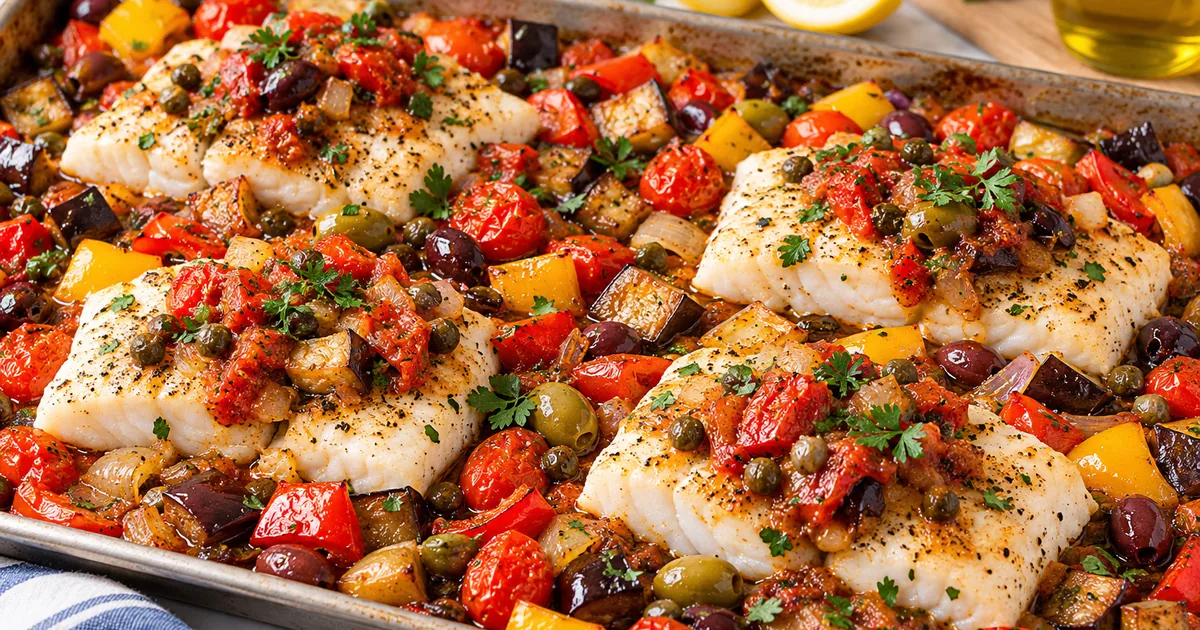
This sheet-pan dinner puts cod alongside a sweet-sour mixture of roasted eggplant, peppers, tomatoes, olives, and capers. The vegetables go into the oven first because dense eggplant needs more time than a fish fillet. Once they have softened, the cod is added for a short final bake and checked with a thermometer. The result is a distinct meal built around vegetables and a vinegar finish, rather than a basic garlic-and-oil cod fillet with a side suggested separately.
“Caponata vegetables” signals the eggplant, tomato, caper, olive, and sweet-sour direction. A sheet-pan version is an adaptation; it is not presented as an authentic Sicilian caponata or a direct copy of a stovetop method. The vinegar and honey are measured and added during the second stage, so their flavor reaches the vegetables without soaking raw cod in a long marinade. The fish itself gets a light coating of oil, salt, and pepper. Its doneness comes from the thickest part reaching 145°F (63°C), not from the vegetables’ color.
Four cod portions totaling about one and a half pounds make four main-course servings. Plan roughly twenty minutes to cut and arrange the vegetables and about thirty-five minutes of oven time, for a fifty-five-minute planning total. The vegetable roast takes about twenty minutes before the fish is added; the fish may then need twelve to fifteen minutes. These are estimates for an uncrowded large rimmed pan and fillets about an inch thick. Smaller pieces may cook sooner, thicker ones later, and a crowded tray changes how vegetables brown.
Table of Contents
Ingredients for Sheet Pan Caponata Cod
Use one medium eggplant, about one pound, cut into roughly three-quarter-inch cubes. Uniform pieces help them soften at the same rate. A red bell pepper cut into one-inch pieces and one small red onion cut into wedges add sweetness and structure. One cup of cherry tomatoes can be left whole or halved if large. The tomatoes release some juice as they roast; the goal is soft, lightly browned vegetables, not a deep layer of liquid under the fish.
Three tablespoons of olive oil are divided: two tablespoons coat the eggplant, pepper, onion, and tomatoes before their first roast, while one tablespoon is brushed over the cod at the second stage. Two minced garlic cloves and one teaspoon dried oregano go with the vegetables. Measure one-half teaspoon kosher salt total, using one-quarter teaspoon for the vegetables and the remaining quarter teaspoon for the cod. Use one-quarter teaspoon freshly ground black pepper total, divided between the vegetables and fish. A different salt’s crystal size can change the seasoning by volume; the recipe card specifies kosher salt rather than treating every salt as identical.
The sweet-sour finish contains two tablespoons red wine vinegar and one tablespoon honey. Stir them together in a small bowl so the honey distributes. Add two tablespoons drained capers and one-quarter cup chopped pitted green olives. These briny ingredients already carry salt, so the measured salt is intentionally modest. Two tablespoons chopped flat-leaf parsley are scattered over the cooked dish. The parsley is a fresh finish, not an ingredient expected to survive the full hot roast.
The amounts create a defined formula: vegetables and cod share a tray, but the main sauce is a glaze for the vegetable mixture rather than a bath for the fish. Do not add an unspecified jar of sauce, a second pour of oil, or more honey without changing the written recipe. Those changes could alter moisture, salt, and the way the eggplant browns. The stated vinegar and honey quantities define the sweet-sour sauce in this version; adjustments would change the recipe.
Why the oven stages matter
Heat the oven to 425°F (220°C) and use a large rimmed sheet pan. The rim contains the tomato juices and the vinegar mixture. A pan about 18 by 13 inches gives the vegetables space in a single layer; two smaller pans can be used if one is crowded, but oven position and timing may differ. Toss the eggplant, pepper, onion, tomatoes, two tablespoons oil, garlic, oregano, a quarter teaspoon salt, and one-eighth teaspoon of the measured black pepper directly on the tray. Spread the pieces out, with some bare metal visible. A deep mound would steam rather than develop roasted edges.
Roast the vegetables for about twenty minutes, stirring once halfway. They should have begun to soften and show some browning before the fish arrives. Eggplant size and water content vary, so if the cubes are still very firm, give them more time and keep the cod chilled. This staging is the critical difference from placing raw cod and raw eggplant on the tray at the same moment. The fish’s shorter safe-cooking window would make the vegetable timing unreliable if both began together.
While the vegetables roast, keep the cod refrigerated. Pat the fillets dry, check for pin bones, and set them on a clean plate. Whisk the vinegar and honey, then stir in the capers and olives. Use a separate clean utensil to handle this vegetable mixture. When the first roast is complete, take the pan out safely, toss only the vegetables with the vinegar mixture, and clear four spaces. Put the cod in those spaces, brush the fish with the remaining tablespoon of oil, and sprinkle it with the remaining quarter teaspoon salt and one-eighth teaspoon black pepper. Keep utensils and surfaces that touched raw fish away from the ready-to-eat parsley and serving plates.
Return the pan to the oven. Bake about twelve to fifteen minutes, checking the thickest part of each fillet with a food thermometer for 145°F (63°C). Oven position, fillet thickness, and the temperature of the fish when it enters the oven affect elapsed time. If some pieces finish before others, move those to a clean platter and continue the remaining fillets until they reach the endpoint. Once the fish is done, the vegetables should be tender and the vinegar mixture lightly reduced. Sprinkle parsley over the vegetables and serve promptly.
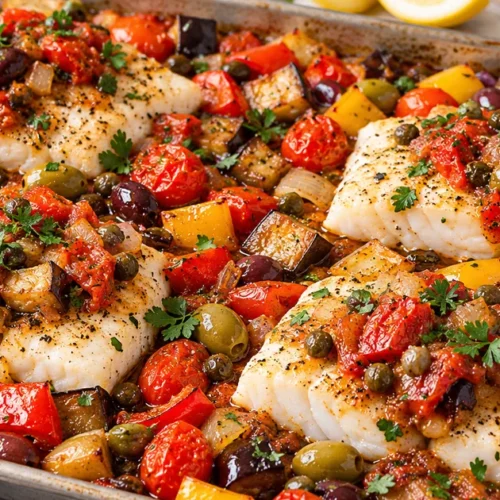
Sheet-Pan Cod with Caponata Vegetables
Equipment
- 1 large rimmed 18-by-13-inch sheet pan
- 1 food thermometer
Ingredients
- 1.5 lb cod fillets divided into four approximately 6-oz portions, thawed if frozen
- 1 medium eggplant about 1 lb, cut into 3/4-inch cubes
- 1 red bell pepper cut into 1-inch pieces
- 1 small red onion cut into wedges
- 1 cup cherry tomatoes whole or halved if large
- 3 tbsp olive oil divided: 2 tbsp for vegetables and 1 tbsp for cod
- 2 cloves garlic minced
- 1 tsp dried oregano
- 1/2 tsp kosher salt divided equally between vegetables and cod
- 1/4 tsp freshly ground black pepper divided equally between vegetables and cod
- 2 tbsp red wine vinegar
- 1 tbsp honey
- 2 tbsp capers drained
- 1/4 cup pitted green olives chopped
- 2 tbsp flat-leaf parsley chopped, for finishing
Instructions
- Preheat the oven to 425°F (220°C). On a large rimmed 18-by-13-inch sheet pan, toss the eggplant, red pepper, onion and tomatoes with 2 tablespoons of the olive oil, the minced garlic, oregano, 1/4 teaspoon kosher salt and half the measured black pepper. Spread in one layer.
- Roast the vegetables for about 20 minutes, stirring halfway, until the eggplant starts to soften and brown. If still firm, continue roasting and keep the cod chilled.
- Whisk the vinegar and honey, then stir in the capers and chopped olives. Toss this mixture with the roasted vegetables. Make four spaces in the pan and add chilled, patted-dry cod; brush with the remaining 1 tablespoon olive oil and season with the remaining 1/4 teaspoon kosher salt and pepper.
- Return the pan to the oven and bake for roughly 12–15 minutes, until the thickest part of every cod portion reaches 145°F (63°C). Adjust the time for fillet thickness and move any portions that finish early to a clean plate.
- Transfer the cod to clean serving plates, divide the vegetables and pan juices between four servings, sprinkle with the chopped parsley and serve promptly.
Notes
Keeping the cod distinct from the vegetables
Cod has a mild flavor and delicate flakes. Place each fillet in an open space on the pan rather than burying it under eggplant. That allows a thermometer probe to enter the thickest part and lets you lift the cooked fish without breaking it apart in the vegetables. The capers and olives can surround the portions, but the fish does not require a heavy topping while it bakes. Spoon some vegetables beside each portion on a clean plate; the sweet-sour juices can be added from the pan after the safe endpoint is confirmed.
SABSEA’s oven-baked cod with garlic and olive oil is a separate published preparation. Its short 400°F fillet bake uses garlic, oil, lemon, and parsley in a baking dish. This sheet-pan meal first roasts eggplant and peppers at 425°F, then adds cod with vinegar, capers, olives, and honey in a second stage. The baked-cod page is a useful related option for a simpler fish-first method; its timing should not be copied onto this tray of vegetables.
The fish may release liquid as it cooks, especially if it was previously frozen. Thaw frozen cod safely in the refrigerator according to its package and pat it dry before the stated preparation begins. Do not crowd the pan to compensate for excess moisture. If the vegetables are tender but a thick fillet has not reached 145°F, continue to cook the fish and monitor it, moving vegetables from hot edges if they threaten to scorch. A fixed clock is a planning aid, not a substitute for the measured endpoint.
How to serve the sheet-pan meal
Divide the vegetables into four portions and set one cod fillet with each. Plain cooked grains or crusty bread can catch the bright pan juices, though neither is part of the measured card. A green salad can sit alongside without repeating the eggplant and pepper mixture. The dish already contains salty capers and olives, so invite diners to taste before adding table salt. The parsley goes on after baking to keep its fresh note.
The vegetables are substantial enough to define the meal, but portion sizes depend on the eggplant and fillet sizes available. The specified one-and-a-half-pound fish total is more precise for shopping than “four fillets” alone. If one fillet is much thicker than another, place the larger piece where the pan heats evenly and check every portion individually. Serving four people does not mean all four fillets necessarily finish at the same minute.
For a dinner with guests, chop vegetables and measure the sauce before the oven stage, but keep raw cod cold until the tray is ready for it. You may stir the vinegar and honey in advance in a covered small bowl. Add capers and olives at the specified second stage so they do not spend the entire roast drying out on the pan. Do not hold a raw fish tray at room temperature while waiting for other courses. Prepare clean plates before you move the cooked fish.
Food safety and storage
FoodSafety.gov lists 145°F (63°C) for finfish such as cod. Insert a thermometer into the thickest part without touching the pan. Opaque color and flaking may provide clues, but the written method uses the measured endpoint for the fish. Keep raw seafood separate from produce and the clean parsley, wash tools and surfaces after raw-fish contact, and transfer cooked portions to clean dishes. FoodSafety.gov safe minimum temperatures and FDA seafood handling support these instructions.
Move leftovers to shallow, covered containers and refrigerate promptly at 40°F (4°C) or below. Perishable food should be refrigerated within two hours, or within one hour if exposed to temperatures above 90°F (32°C). General cooked leftovers can be used within three to four days in refrigeration; follow a shorter applicable fish-package instruction. Reheat leftover cod and vegetables to 165°F (74°C), checking a central portion rather than judging by warm edges. The fish may become drier after reheating, so a covered gentle method can help texture but does not change the required temperature. FoodSafety.gov cold storage and safe reheating temperatures provide the general guidance.
Store the fish and vegetables together or in separate shallow containers according to how you will reheat portions, but keep both chilled. Do not leave the pan on the stove overnight, and do not rely on the acidity of vinegar to preserve a seafood dinner. If the dish has passed the applicable room-temperature limit, discard it. The refrigerator window begins when the food was cooked and chilled, not when it is eventually divided into lunch containers.
Frequently asked questions
Is this traditional caponata?
It is a sheet-pan meal inspired by the eggplant, tomato, olive, caper, and sweet-sour combination. The cod and oven staging make it an adaptation, so the article does not claim a traditional or regionally authoritative caponata. The name communicates the vegetable profile a reader can expect.
Can the cod and eggplant go in at the same time?
The stated timings assume a twenty-minute head start for the vegetables. Eggplant cubes take longer than roughly one-inch cod fillets, and simultaneous roasting could leave the vegetables too firm or the fish overcooked. Wait for the vegetable first-stage cue, then add the fish and verify its own endpoint.
What if the cod is still cold in the center after fifteen minutes?
Continue baking and check the thickest part until it reaches 145°F (63°C). Fillet thickness and oven behavior vary. Move any finished fillet to a clean platter, and protect vegetables from scorching if the remaining fish needs more time. Do not serve underheated fish merely because the vegetable timer has ended.
Can I omit the honey?
The tablespoon of honey is part of the measured sweet-sour vegetable formula. Leaving it out makes a sharper dish, and substituting another sweetener may behave differently in the oven. Such a change is a variation, not a tested equivalent to the recipe card. Leaving it out would change the measured sweet-sour formula rather than produce a tested equivalent.
Which tray size should I use?
A large rimmed sheet pan of about 18 by 13 inches is the working equipment. It allows one layer of vegetables and room for four cod portions at the second stage. If your pan is smaller, divide the mixture rather than pile it high; two pans can roast differently, so use tenderness and temperature cues rather than assuming the same minute marks.
The useful sequence
Roast the vegetables first, coat them with the measured vinegar-caper-olive mixture, then bake the cod in spaces on the same pan until it reaches 145°F. That sequence makes the sheet-pan format serve the ingredients rather than forcing all of them into a single timing assumption. A final parsley scatter and clean plated portions complete a four-serving meal whose editorial intent remains distinct from SABSEA’s garlic-and-olive-oil baked cod.