
Sardine Pasta with Sun-Dried Tomatoes and Capers
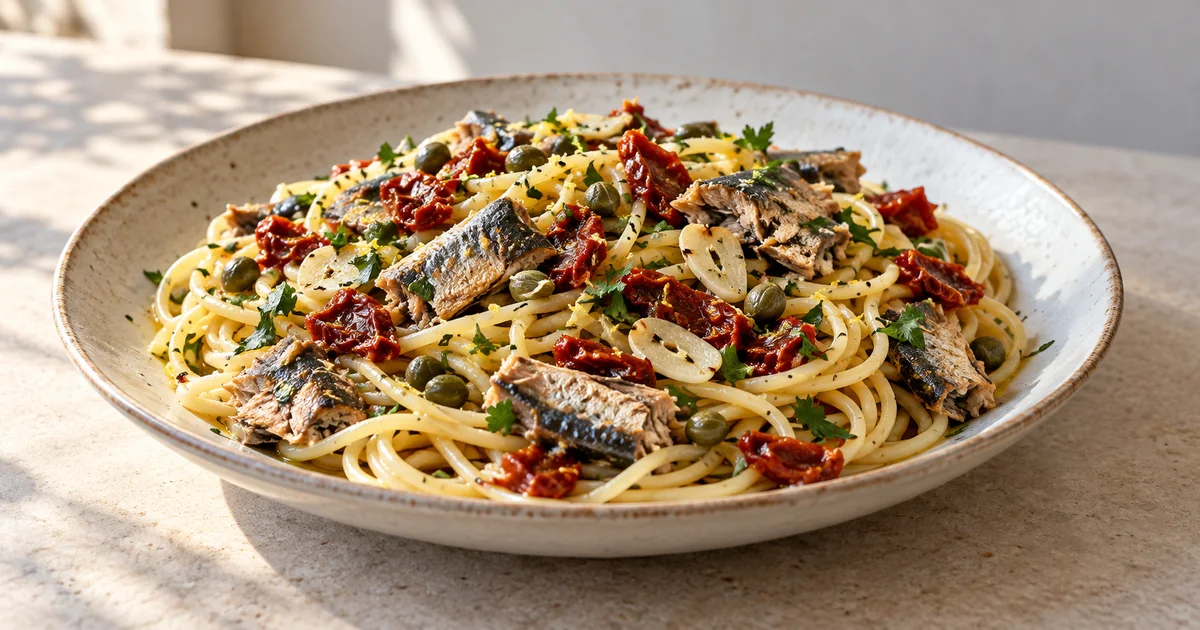
Table of Contents
Sardine pasta for a practical weeknight dinner
Canned sardines make a useful starting point for a quick sardine pasta dinner when fresh fish is not on the menu. This version brings together oil-packed sardines, sun-dried tomatoes, capers, garlic, lemon, and parsley in a light sauce that clings to spaghetti or linguine. The fish goes into the pan after the heat is off, so the pieces stay recognizable instead of disappearing into the pasta. The result is a two-serving dinner with a short ingredient list and no separate fish-cooking step.
The recipe card below gives the exact quantities and sequence. Allow about 10 minutes to prepare the ingredients and 12 minutes for cooking, for an estimated 22 minutes total. Pasta shapes and stovetops vary, so follow the package for the pasta and use its texture, rather than a promise about the clock, to decide when to drain it. You can prepare the garlic, tomatoes, parsley, and lemon while the water comes to a boil.
What each ingredient does
Eight ounces of dried spaghetti or linguine gives the sauce enough strands to coat without overwhelming the two tins of sardines. A similar long pasta is easy to toss with the small pieces of tomato and caper. If you choose a short shape, keep the same dry weight and add the cooking water gradually so sauce collects in its ridges rather than pooling at the bottom of the bowl. The pasta water is an ingredient here: a little of its starch helps the oil, lemon, and pan juices form a thin coating.
Use two tins of boneless sardines packed in olive oil, about 3.75 ounces each. Drain them before adding them to the finished pasta; the recipe includes a separate tablespoon of olive oil for the skillet, so the result is easier to control. Check the label if you need boneless fish, because canned sardines may be sold with skin or bones. A tin packed in water will behave differently in the sauce and may need a little more olive oil. Avoid assuming that flavored tins will match the lemon, tomatoes, and capers.
Oil-packed sun-dried tomatoes contribute concentrated tomato flavor without turning this into a red sauce. Drain and chop one-third cup so pieces distribute evenly. Two tablespoons of drained capers add a sharp, salty accent. Three thinly sliced garlic cloves need only brief, gentle heat; browned garlic can dominate the fish. Lemon zest supplies aroma, and one tablespoon of juice brightens the finished dish after the heat is off. Parsley adds freshness. The optional half teaspoon of red pepper flakes is a background heat rather than the central flavor.
Because sardines, capers, and preserved tomatoes can all contain salt, taste the finished pasta before adding any. The quarter teaspoon of black pepper in the card is enough to start. Do not discard the reserved half cup of pasta water until the bowls are assembled; it is easier to loosen a tight sauce with another spoonful than to rescue a watery one.
How to assemble the sauce without drying out the sardines
Set out a large skillet while the pasta cooks. Warm the measured tablespoon of oil over medium-low heat, then stir the garlic for about a minute. You want fragrance without a dark edge. The tomatoes, capers, and optional pepper flakes need another brief minute in the pan. This short warm-up releases their flavors into the oil while leaving them distinct, rather than cooking them down into a paste.
Reserve the starchy water immediately before draining the pasta. Add the drained strands to the skillet and toss with just a splash of that water. If the pasta looks dry, add more a tablespoon at a time while tossing. The goal is a glossy coating, not a pool of liquid. Turn the heat off before you fold in the drained sardines. Break them into generous pieces with a spoon and toss only enough to distribute them. Add lemon zest, the measured juice, parsley, and black pepper at the end. This order keeps the herbs and citrus fresh and avoids repeated stirring that would mash the fish.
Serve the two bowls as soon as they are assembled. If the sauce thickens while you set the table, a small spoonful of the reserved water can loosen it. Taste for salt only after everything is together. The exact salt level of canned fish and jarred tomatoes differs by brand, so a fixed amount of added salt would be less useful than this final check.

Sardine Pasta with Sun-Dried Tomatoes and Capers
Ingredients
- 8 oz dried spaghetti or linguine
- 2 tins of boneless sardines in olive oil about 3.75 oz each, drained
- 1 tbsp olive oil
- 3 garlic cloves thinly sliced
- 1/3 cup oil-packed sun-dried tomatoes drained and chopped
- 2 tbsp capers drained
- 1/2 tsp red pepper flakes optional
- 1 lemon zest and 1 tbsp juice
- 1/4 cup chopped flat-leaf parsley
- 1/4 tsp freshly ground black pepper
- 1/2 cup reserved pasta cooking water as needed
Instructions
- Bring a large pot of water to a boil. Cook the pasta according to its package directions until just al dente. Before draining, reserve 1/2 cup of the starchy cooking water.
- While the pasta cooks, warm the olive oil in a large skillet over medium-low heat. Add the sliced garlic and stir for about 1 minute, until fragrant but not browned.
- Stir in the chopped sun-dried tomatoes, drained capers, and red pepper flakes if using. Warm for about 1 minute. Add the drained pasta and a splash of reserved pasta water; toss until the strands are lightly coated, adding more water a tablespoon at a time if needed.
- Turn off the heat. Gently fold in the drained sardines, breaking them into large pieces, then add the lemon zest, 1 tablespoon lemon juice, parsley, and black pepper. Toss briefly without crushing the fish.
- Divide between two bowls and serve immediately. Taste before adding any extra salt, because the sardines, tomatoes, and capers may already be salty.
Notes
Useful substitutions and controlled variations
Linguine and spaghetti are interchangeable at the same dry weight. A short pasta also works, though it will carry the sauce differently. If oil-packed tomatoes are unavailable, rehydrated dry-packed tomatoes can be used after they are softened and drained, but they will not bring the same seasoned oil. Keep the skillet oil in the recipe and assess the sauce as you toss. A parsley substitute such as finely chopped chives changes the flavor, so use it for a variation rather than expecting the same herbaceous finish.
For less heat, omit the red pepper flakes entirely. For more lemon character, add a little extra zest at the table; increasing the juice substantially can make the pasta overly sharp. If you choose sardines with bones or skin, use them according to your preference and label information, but know that the texture will differ from the boneless version specified in the card. Another canned fish would make a different recipe, so the times and flavor balance here are written for sardines.
The capers and sun-dried tomatoes are doing distinct jobs. Replacing both with a large quantity of another salty ingredient would change the recipe’s balance. If you must omit capers, taste the final dish before considering another sharp garnish. There is no need for a heavy cream sauce: the cooking water and olive oil already give the pasta enough moisture without hiding the fish.
Common mistakes and how to avoid them
Adding the sardines while the skillet is still actively simmering is the easiest way to turn the large pieces into flakes. Switch off the heat first. Similarly, vigorously stirring after the fish goes in makes the sauce muddy. Use broad, gentle folds and stop as soon as the fish is spread through the noodles. If a few pieces remain intact on top, that is useful for serving.
A dry skillet after draining the pasta usually means there was too little reserved water, not that the dish needs a great deal more oil. Start with a splash and add water gradually. On the other hand, pouring in the entire half cup at once can leave liquid at the bottom of the pan. The target amount depends on how much the pasta absorbs and how thoroughly the tomatoes were drained.
Keep the garlic below browning temperature and slice it thinly so it warms evenly. If it browns or burns, starting that brief skillet step again is preferable to carrying a bitter taste through the whole dish. Do not salt automatically before tasting: capers and canned sardines already contribute seasoning. Finally, add parsley and lemon after the heat is off, rather than boiling their fresh flavor away.
Serving ideas and related SABSEA recipes
This pasta is substantial as a two-serving main dish. A simple green salad or crisp vegetables can be served alongside without adding more salt or acidity to the skillet. If you want bread, offer it on the side rather than using it to thicken the pasta. A lemon wedge at the table lets each person adjust the citrus after tasting.
For a different sardine method, SABSEA’s baked sardines with Mediterranean herbs uses the oven rather than canned fish folded through pasta. Keep these as separate meal ideas; the baked fish directions and cooking endpoint do not apply to the already canned sardines in this dish.
Storage and reheating
Serve this pasta fresh for the best texture, especially because the sardine pieces and parsley become softer after refrigeration. If you have leftovers, transfer them to a shallow covered container and refrigerate within two hours, or within one hour when the surrounding temperature is above 90°F (32°C). Keep the refrigerator at or below 40°F (4°C). The general U.S. government guidance for cooked leftovers is three to four days in the refrigerator, but check the label of any opened canned fish for a more restrictive instruction. Do not leave the mixed pasta in an opened tin.
Reheat a portion thoroughly to 165°F (74°C), using a food thermometer when practical. A skillet over gentle heat with a small splash of water can help separate the strands; stir carefully and check that the center heats through. The sardines will break down more on reheating, so a newly assembled bowl is preferable when appearance matters. Discard food left outside the safe time limits rather than relying on smell alone. These storage and reheating limits follow FoodSafety.gov’s refrigeration guidance and the safe minimum temperature chart.
Frequently asked questions
Do the sardines need to be cooked before they go into the pasta?
No separate fish-cooking step is part of this recipe: it uses commercially canned sardines. Drain them and fold them into the hot pasta after turning off the skillet. If you are using fresh sardines, this card is not the appropriate set of directions; they need their own safe cooking method.
Can I use sardines packed in water?
You can, but the sauce will have less of the rounded flavor associated with oil-packed sardines. The recipe still includes a tablespoon of oil in the skillet. Add the reserved pasta water gradually and judge the finished coating before changing the amount of oil.
Why reserve pasta water instead of using plain water?
The cooking water contains starch released by the pasta. Combined with the measured olive oil and the ingredients already in the skillet, it helps distribute the sauce thinly across the noodles. Add only as much as needed; half a cup is the amount to reserve, not a requirement to pour it all in.
Can I make it ahead for a gathering?
You can chop the tomatoes, slice the garlic, and prepare the parsley and lemon in advance, keeping perishable prepared ingredients refrigerated. Cook and assemble the pasta shortly before eating. Holding the completed dish for a long time softens the fish and herbs, and it does not improve the texture.
What if the finished pasta tastes too salty?
First check that the capers and tomatoes were drained and that no extra salt went in before tasting. A small amount of unsalted pasta or a fresh squeeze of lemon can temper the perception of salt in a serving, but adding water indiscriminately will make the sauce thin. Next time, choose a lower-sodium canned fish or caper product if available.
The next step
Bring the pasta to the table while the lemon and parsley are fresh. The recipe card keeps the measured quantities and five-step sequence in one place; the guidance above helps you adjust moisture and seasoning without changing the sardine-centered idea.